͏‌ ͏‌ ͏‌ ͏‌ ͏‌ ͏‌ ͏‌ ͏‌ ͏‌ ͏‌ ͏‌ ͏‌ ͏‌ ͏‌ ͏‌ ͏‌ ͏‌ ͏‌ ͏‌ ͏‌ ͏‌ ͏‌ ͏‌ ͏‌ ͏‌ ͏‌ ͏‌ ͏‌ ͏‌ ͏‌ ͏‌ ͏‌ ͏‌ ͏‌ ͏‌ ͏‌ ͏‌ ͏‌ ͏‌ ͏‌ ͏‌ ͏‌ ͏‌ ͏‌ ͏‌ ͏‌ ͏‌ ͏‌ ͏‌ ͏‌ ͏‌ ͏‌ ͏‌ ͏‌ ͏‌ ͏‌ ͏‌ ͏‌ ͏‌ ͏‌ ͏‌ ͏‌ ͏‌ ͏‌ ͏‌ ͏‌ ͏‌ ͏‌ ͏‌ ͏‌ ͏‌ ͏‌ ͏‌ ͏‌ ͏‌ ͏‌ 
Is this email not displaying correctly? View it in your browser.
Image description
Image description

                                Demeter Newsletter -- March 2024


Greetings from Demeter!

As the season turns toward Spring, we are busy here in the office working through Certification Renewals!  In this issue, you'll find some details on updates to the Demeter Standard, some fascinating new research on the microbial life of the Preparations, and profiles of two of our certified operations.    Please send future newsletter content suggestions or questions to:   [email protected].

Image description

***REMINDER!***   

It's time to submit your

Certification Renewal Documents!

Demeter’s 2024 Farm and Processor Renewal Request went out on February 27th and the Trader Renewal Request was sent on March 12th


Deadlines for return and payment submission are as follows:


Farms and Processors:

Return your Application by April 1st.


Traders:

Return your Application by April 10th.


Late fees will be assessed for late applications and payments.


Thank you for your cooperation!

    If you have any questions or did not receive the email please contact 

    Sarah Rhynalds at [email protected].


    Meet the Farmers!

    Profiles of Demeter-Certified Operations, 

    Old and New

    Image description
    Image description

    Mt. Hood Organic Farms

    Mt. Hood, Oregon

    Brady and John Jacobson


    Mt. Hood’s 55 acres of high density dwarf trellised apples and pears sits on a beautiful farm with stunning views of the mountain from which the farm takes its name. The Hood River runs through the property and the farm backs up on national forest, so it is no wonder it has been featured in national magazines showcasing its wedding venue.


    The Demeter-certified orchard includes nearly 100 varieties of heirloom and specialty apples and pears and is among our largest certified farms in the country. Already farming organically, and focusing on biodiversity, their transition to Biodynamic was an easy next step, and they became certified in 2004.


    “I think if you talk with many Biodynamic practitioners, they would tell you that each piece of land is unique and dictates how you farm it. We are not here to impose our own selves on this land as much as to listen to what the land tells us it needs and how to go about fulfilling those needs.


    Biodynamics calls itself “spiritual agriculture” and I think that’s what guides many of us. It’s all very intuitive, but also based on science. Ours is a wild setting next to a national forest with abundant wildlife. When we bought this piece of land, we decided that we would have to co-exist with the creatures here and suffer some loss, but we wanted to create a refuge. So we fenced each orchard block separately and allowed for wildlife corridors running through the property so the animals could move from the forest to the river undisturbed.


    Creating a farm that co-exists in harmony with nature, as much as it’s possible to do that, is what motivates us. And, given the constant destruction of wildlife habitat and our precious soils, how can a sentient being do anything less than farm with empathy for our planet?” -- Brady Jacobson


                                           🍎🍎🍎🍎🍎🍎🍎🍎🍎🍎🍎🍎🍎


    Mike’s Organic Curry Love

    Boise, Idaho

    Mike Buechi and Laurie Sebestyen


    Mike and Laurie established their company in 2008, based on their love of organic cooking and gardening. They became Demeter-certified Traders in 2023, importing Biodynamic curry sauces and coconut cream from Thailand.


    Mike grew up in Switzerland, and worked on a Biodynamic produce farm and orchard as a teenager, before starting a chef apprenticeship. The experience instilled a love for natural, high-quality food and an awareness of the production system that produces it.


    Of his appreciation of Biodynamic farming, he writes, “The approach that we are one with Nature and working with Nature instead of against it. I am terrified to think that most agriculture is basically at war with Nature and it translates to Biodiversity decline and sick humans and animals all over the world.”

    Image description

    Standards Update: Potting Soils and Growing Media

    The Biodynamic Farm Standards were updated, published, and sent to Demeter members in March of 2023 with the Renewal email. Some of the standards revisions will be described below and in subsequent newsletters. 


    Here is the address to access the Standards with the revisions highlighted:

    https://demeter-usa.org/downloads/Demeter_Biodynamic_Farm_Standard_change_highlights.pdf


    Potting Soils and Growing Media


    Definitions:

    · Potting soil – The mixture used to start seedlings

    · Growing medium – The mixture in which microgreens are grown to maturity


    Potting soil (a mixture used to start seedlings) should, if possible, originate from the farm's own compost 32 which has been made with Biodynamic compost preparations. Biodynamic compost must comprise at least 25% of the mix.


    The use of commercial potting mixes requires the approval of Demeter and these mixes must have the compost preparations 502-507 applied to the potting mix prior to germination of the seeds. Options for introducing the preparations to the potting mix include, but are not limited to: 1) inserting the compost preparations to the potting mix at the time of delivery (at least a month prior to use), 2) a tea made from prepared compost applied as a spray or drench, stirred Barrel Compost or stirred Prepared-500 to the potting soil before seed germination.


    Potting mixes with less than 25% Biodynamic compost may be used for certain plants (like cactus, succulents, Mediterranean herbs, etc.) due to horticultural propagation requirements, but must be approved by Demeter USA.

    Exploring the Rhizosphere - Microbes & More


    By Ian Hunter

    Founder of Cure Soil LLC


    The Josephine Porter Institute for Applied Biodynamics, Inc. and Cure Soil LLC have initiated a research experiment this season. We will be running a suite of bioassays throughout the 2024 growing season measuring the microbial life present within each of the biodynamic preparations using soil microscopy. Our goal is to bridge the gap between the secrets within the biodynamic preparations and what is known to the scientific community as the parameters to define healthy soil. Our intention is to inspire more farmers to adopt biodynamic practices by elucidating the benefits of Dr. Steiner’s preparations.


    Using soil microscopy techniques developed by Dr. Elaine Ingham, we can now accurately measure the quantity and quality of microorganisms within soil, compost, and the biodynamic preparations. The data we found is nothing short of profound. Some of the richest microbial profiles ever witnessed are present in the vast majority of the biodynamic preparations.


    So, what does this mean for farmers and gardeners? Research conducted by Dr. David Johnson of the University of New Mexico shows the abundance of plant nutrients in the vast majority of terrestrial ecosystems. Yet to a great extent, these minerals are in forms unavailable to plants. Soil microbes dissolve, digest, and excrete these elements into plant-available forms. Complexed by the paramagnetic properties of humic and fulvic acids, these nutrients are conserved within the rhizosphere in farm fields and remain available for plant uptake, thus producing nutritionally rich crops. The nutrient-rich plant possesses the energy needed to produce alchemical biometabolites that are capable of protecting itself against pathogens and diseases. In short, we are working to shed light on the processes by which farms, farmers, and communities become more sovereign.


    Stay tuned for a more in-depth dive into the results and the science behind what this data means for the future of Agriculture.

    Inputs Update:


    Want to use a new product on your Farm or in your Processing Facility?

    Please take the following steps for adding new inputs to your approved input list. Email all crop input and processing aid input approval requests to [email protected]. For organic certified operations, please consider copying Demeter's input email address when you email your organic certifier. Your organic certifier does not notify Demeter when they add a new input.

    Steps:

    1. Send the input label (look online or take a picture that includes the ingredient panel)
    2. Indicate your intended use for the input
    3. Send a specification sheet (may substitute for #1 for inputs without a label).
    4. An auto-response will be sent so you know your request is received
    5. Demeter staff will regularly monitor this email address and review requests at least once a week. If an emergency approval is required, email a staff member directly.
    6. Demeter will request additional information from the input supplier as needed


    Remember: Get input approval from Demeter before use to avoid risk to your certification.


    - Staff Corner -

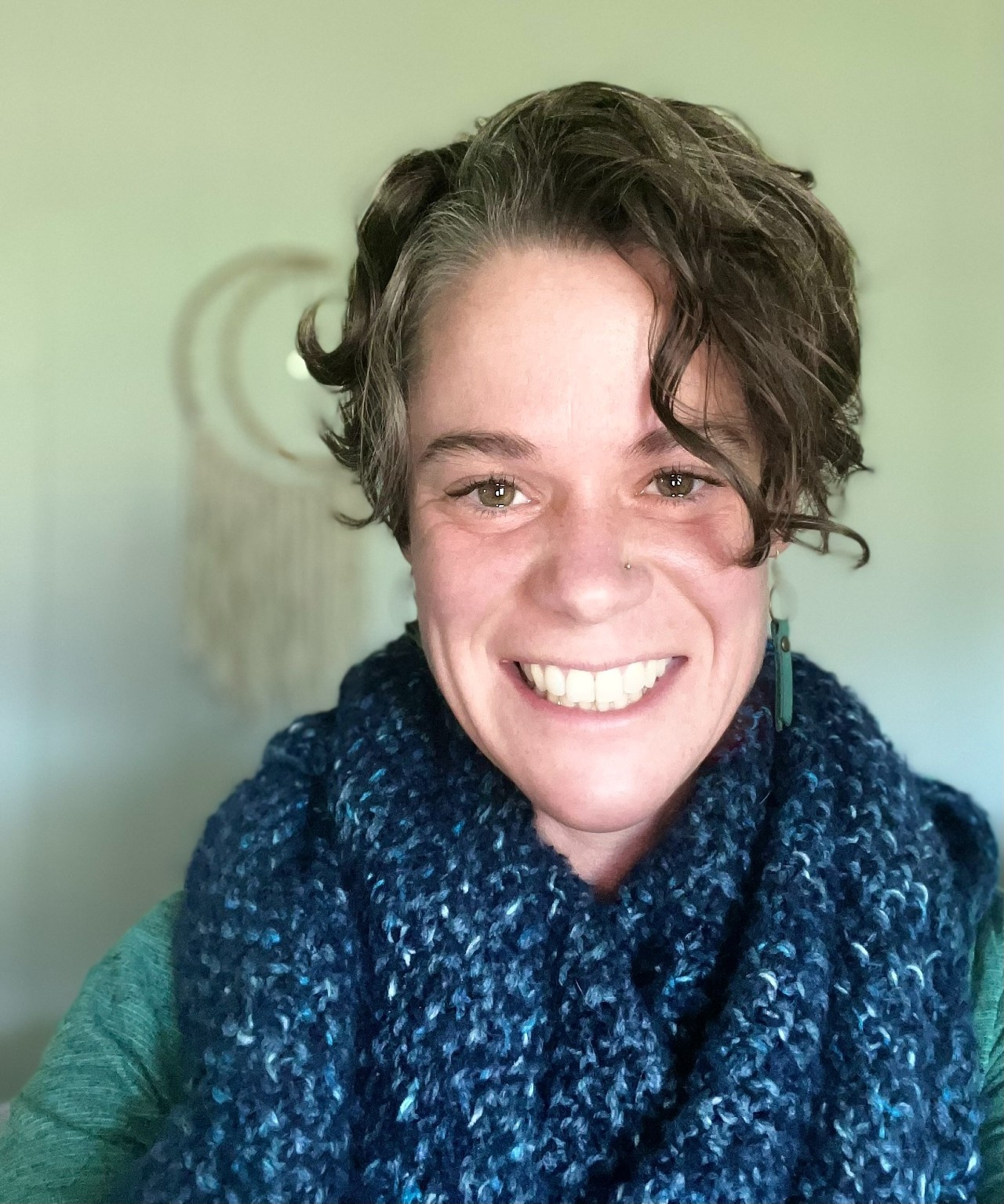
    Natalie Brinkley

    Certification Specialist

    Image description

    Hiya! 

    I joined the Demeter Team in January of 2021. My main roles at Demeter are reviewing inspection documents and materials for your input lists. It’s such a pleasure working with you all! I love reading about your operations, seeing the photographs of your beautiful farms & vineyards in the inspection reports, meeting you in person, or having known you from previous chapters in my life! I met biodynamics in the fall of 2005 and then lived at JPI in 2006 & 2007. I worked at a biodynamic winegrowing estate in Napa educating staff and customers on biodynamic practices, was a Waldorf teacher, a Waldorf Curative educator, and had a biodynamic preparation making business in California for many years. I kinda like anthroposophy; here’s one of my favorite jokes:


    A priest, a rabbi, and a Waldorf teacher all end up at the Pearly Gates at about the same time. St. Peter welcomes them and says, “Before you enter the Kingdom of Heaven there is an interview process. Please, take a seat.” The three newcomers exchange glances and take their seats. The priest goes in first and is behind closed doors for about an hour. The rabbi and the Waldorf teacher start to worry. Eventually, the priest comes out, he’s been sweating, his collar has popped out, and he says, “Whew, this religion stuff is tough!”, and then takes a seat. The rabbi is next. He’s in with St. Peter for over two hours and the Waldorf teacher starts doubting himself wondering if his ruch shaus should’ve been longer, if he really should’ve stirred the BC for an hour instead of 20 minutes… In time, the rabbi walks out, his legs are shaking, his eyes are bloodshot, he’s been nervously wringing his kippah, and says “Whew, this religion stuff is tough!” - and takes a seat. It’s the Waldorf teacher’s turn. Three hours go by, and the priest and rabbi wonder what could be taking so long and question their own interviews. Another hour goes by and the door finally opens. St. Peter comes out and says, “Whew, this anthroposophy stuff is tough!”


    Anthroposophy is complex, but it doesn’t have to be complicated. It’s a “spiritual science”, which can lead to cognitive dissonance when we link ‘spiritual’ with the invisible, and ‘science’ with the visible. We can characterize the word ‘spiritual’ as having spirit, an individuality, an ego. I view that as meaning I can use my spirit-filled self - this ego-gift I get for becoming a human being - to use my senses as tools for analysis when implementing the scientific method. What happens when I use my sense perceptions (unique to me, due to my own personal experiences creating a particular lens) when observing the natural world? Is this the same thing as saying “biodynamic preparations” and using the word preparations as a verb, and not just a noun? Does the process of making and using the biodynamic preparations as sprays also function as an exercise in cultivating and preparing ourselves to become more fine-tuned instruments of perception?


    After all, Uncle Rudy’s agriculture lectures are also titled “Spiritual Foundations for the Renewal of Agriculture”. Here’s to seeing St. Peter sweat a little!

    Image description

     ~ CALENDAR ~

    If you'd like your event announced in our monthly newsletter, please send details to: [email protected]


    The Oregon Biodynamic Working Group Event:

    Biodynamic Field Day at Eugene Waldorf School

    April 16th, 12 - 4


    Dandelion Festival, New York

    May 4th, 11 - 2

    Churchtown Dairy in Hudson, New York 


    The Biodynamic Federation - Demeter International Members' Assembly

    June 21 - 27 

    As the selected BFDI delegate for Demeter USA and the Biodynamic Demeter Alliance, Evrett Lunquist will attend this meeting which takes place in part in Kobierzyce, Poland, the location of the original Agirculture Course given by Rudolf Steiner in 1924.


    June 28th

    Ökodorf Brodowin, Brodowin, Germany

    Following the assembly, a gathering will be held on June 28th for the 100 year celebration of the birth of Biodynamic agriculture.  More details about this gathering will be included in future newsletters.


    Demeter Business Meetings:

    Demeter Standard Committee – meets the 2nd and 4thTuesday of the month


    Demeter Board – meets the 2nd Monday of the month

    Image description

    Facebook: Demeter USA | www.demeter-usa.org

    Twitter: @DemeterUSA | Instagram: demeter_usa

    If you want to unsubscribe, click here.
    Powered by Sender.net