A View from Dornach
By Evrett Lunquist, Executive Director
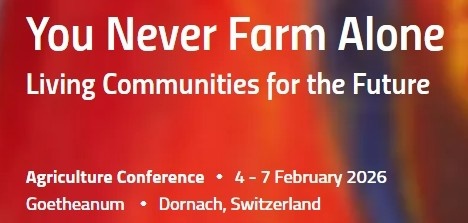
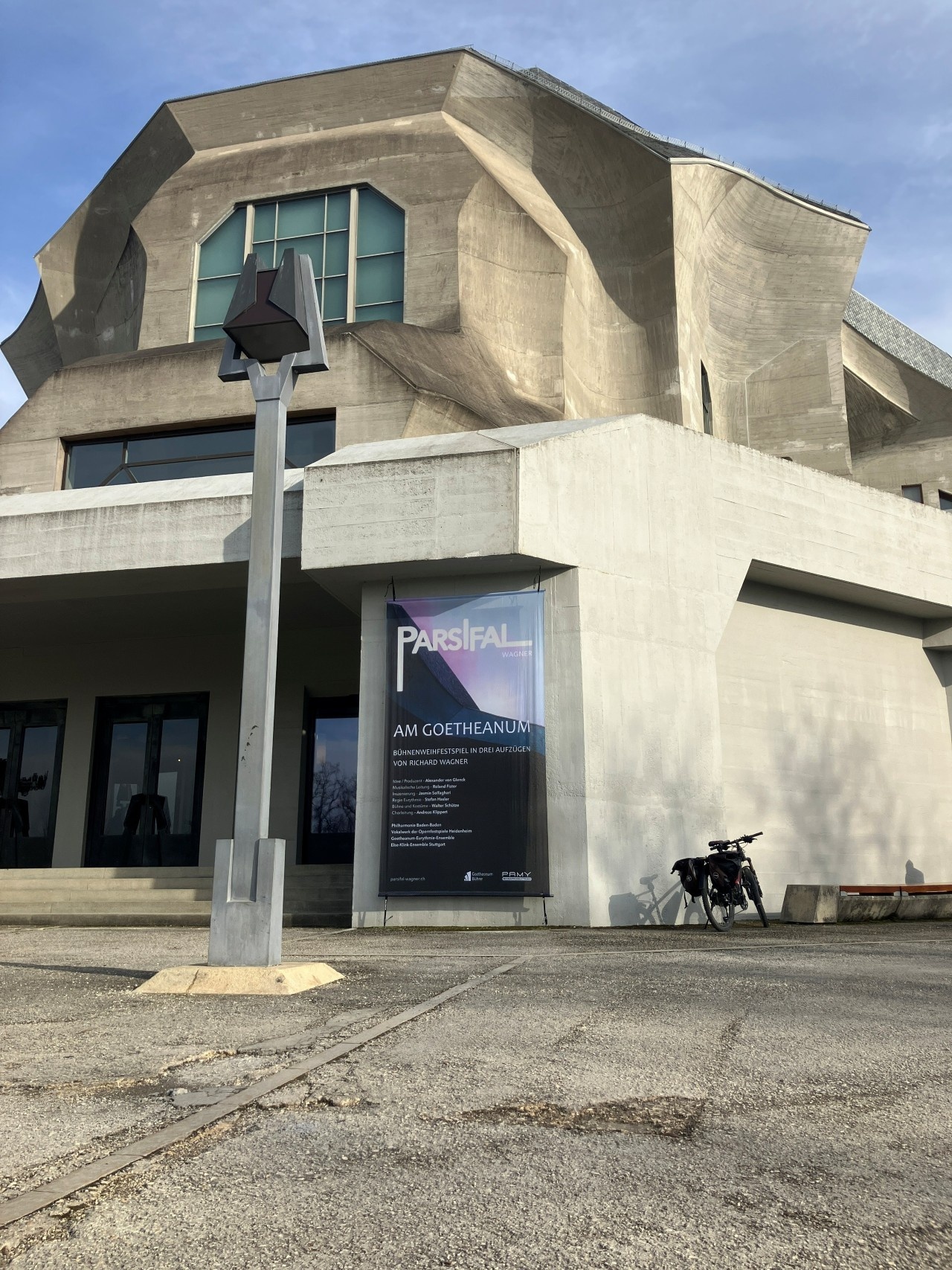
The international Biodynamic Conference was held at the Goetheanum in Dornach, Switzerland from February 4-7th with the theme “You Never Farm Alone.” I attended along with Chelsea Nolan (Project Coordinator for the Biodynamic Economic Working Group) and Beth Hoinacki (Demeter’s Board President). Other Americans I was aware of there were Steffen Schneider (departing Demeter Board member) and Doug Crabtree and Anna Jones-Crabtree from Vilicus Farms in Montana. Anna spoke in the Main Hall on a panel sharing about their farm of 11,000+ organic acres in the “middle of nowhere” and finding people that care about the land. She said when they started farming they thought land access would be the issue, but as people saw the results of their farming with biodiversity, other landowners wanted them to farm their land. Alice Groh was also there to talk about her work with Trauger Groh, her late-husband, who co-authored Farms of Tomorrow (a fundamental book on community supported agriculture) and about the first CSA in the US at Temple-Wilton Farm, which continues today.
Demeter USA is a member of the Biodynamic Federation – Demeter International and we had a pre-gathering of all BFDI members attending the conference. It was an opportunity to make connections with the other Demeter certifiers and biodynamic membership organizations from around the world – roughly 20 countries were represented.
Each conference speaker shared amazing stories, and there is no way to encapsulate them all here. I will share about a few, nevertheless. One keynote panel titled “Re-Thinking Economic Activity” included Fabio Brescacin, president of NaturaSi, which has 350 retail stores in Italy supporting organic and Biodynamic agriculture. In 2025, the company launched a marketing campaign on price transparency, with labeling that shows a breakdown of where the retail cost of a food product goes, ultimately demonstrating what portion of the retail price is paid to their farmers. Even further, the profits of the company were used to open a school for young children. Here is a video to learn more in connection to their 40th anniversary (you can set translate the captions to English if you do not understand Italian).
We also heard about the work of Aonghus Gordon, founder of Ruskin Mills Trust. While the structure of the whole organization is complex involving numerous schools, colleges, and centers, a central aspect is working with children with challenges. Central to these therapeutic endeavors is the children working on an active biodynamic farm. We learned about the healing that can happen with the intentional pairing of animals with children based on the child’s need. As the title of the keynote was “Reimagining Human and Organizational Potential Through the Lens of the Farm,” we also heard about Aonghus’ work to restore various floundering organizations through a Genius Loci audit. A lecture on Genius Loci at the UK Biodynamic Conference can be found here.
I chose a workshop given by Dr. Jürgen Fritz, Research Associate at University of Kassel, Germany on research related to the effects of using Biodynamic preparations. There is a growing body of research verifying their effectiveness, and searching for reasons when less favorable outcomes occur. The results show generally elevated Plant Growth Promoting Microorganisms (PGPM) after applications of Biodynamic preparations with an average peak effect occurring eight weeks post-application. The rule of thumb: the more Biodynamic preparations are used, the greater the effects. We often think of BD501 (silica) as a somewhat inert material. Somewhat surprising was that BD501 generally contained the greatest density of PGPM when compared to BD500 (horn manure). Very interestingly, the BD500 was analyzed as was the soil before and after the application, which indicated a greater impact on the soil than could be attributed to the BD500 material itself. While much more was shared by Dr. Fritz, the last thing I will highlight is the 45-year study by The Research Institute of Organic Agriculture FiBL in Switzerland comparing conventional, organic, and biodynamic preparation + compost practices known and linked here as The DOK Trial. The results show that Biodynamic practices resulted in the highest soil carbon, greatest soil structure, and highest positive climate impact followed by organic, with the worst being conventional. A similar video presentation by Dr. Fritz can be found here and his published research can be found at his University webpage here.
From the start with the BFDI gathering of people from around the world, through the inspirational keynotes, to the support found in the workshops, through new connections made with others and old friendships refreshed, these are a few examples of how the theme– You Never Farm Alone – wove throughout the conference.