Green Hudson February Newsletter
͏ ͏ ͏ ͏ ͏ ͏ ͏ ͏ ͏ ͏ ͏ ͏ ͏ ͏ ͏ ͏ ͏ ͏ ͏ ͏ ͏ ͏ ͏ ͏ ͏ ͏ ͏ ͏ ͏ ͏ ͏ ͏ ͏ ͏ ͏ ͏ ͏ ͏ ͏ ͏ ͏ ͏ ͏ ͏ ͏ ͏ ͏ ͏ ͏ ͏ ͏ ͏ ͏ ͏ ͏ ͏ ͏ ͏ ͏ ͏ ͏ ͏ ͏ ͏ ͏ ͏ ͏ ͏ ͏ ͏ ͏ ͏ ͏ ͏ ͏ ͏

| Economic Advantages of Driving an EV |
|
Submitted by Jeanette Millard.
I watched a webinar recently hosted by the Green Energy Consumers Alliance (GECA), which focused on the continued financial value of driving an electric vehicle (EV). Having purchased a used 2020 Chevy Bolt in 2024, I was interested in the current picture, since the federal rebates had come to an end last fall. |
|
In addition to the environmental and public health benefits from zero tailpipe emissions, here are some of the main economic advantages of driving an EV: |
|
■ Massachusetts state rebates remain at $3,500 for a new or used EV and new EV pickup trucks bring a $7,500 rebate. |
|
■ Rebates are now applied for at the time of purchase at your |
|
|
| |
|
|
| car dealership and can be directly credited to your purchase price through the MOR-EV program. |
|
|
| |
|
|
| ■ Hudson Light and Power provides a rebate up to a $500 for a home charger and installation. National Grid and Eversource may also offer rebates. |
|
■ Overall, maintenance costs are lower; brake pads and tires are generally the only parts that need replacing. And of course, there are no oil changes! |
|
Since transportation emissions account for 38% of Massachusetts’s emissions and cause health as well as environmental problems, we can make a real impact by driving an EV. Currently, new cars average about $50,000. Used EV’s run from $20–30,000, and in most cases, charging your battery costs less than filling your tank. The Green Energy Consumers Alliance has an “EV finder” to look for good deals on new and used EV’s. They’ll also talk you through the rebates and other questions you have. They helped me a lot when I purchased my Bolt. |
|
The information-packed webinar can be accessed here.You can find out more by contacting GECA’s EV program at [email protected]. |
|
|
| |
|
|
| Climate and Energy Committee. We meet monthly on the 3rd Sunday, at 5:00 p.m. right before the general meeting. Current topics include: Heat Smart Cool Smart, EV charging infrastructure, and other related subjects. Want to join our committee? Contact us at [email protected]. |
|
|
| |
|
|
| Education and Outreach Committee. We're currently planning for the new year. Have some ideas you'd like to share? Want to join our committee?
Please contact [email protected]. |
|
|
| |
|
|
| Plastic Reduction Committee.
Plastic Reduction Bylaw: Compliance and Recognition—Since the new plastics reduction bylaw went into effect on January 1, the Plastic Reduction Committee has been hard at work distributing educational fliers to help our local business community navigate the new requirements and ensure a smooth transition. |
|
Monitoring Compliance—With the initial one-month grace period now concluded, the Committee has begun documenting areas where further progress is needed. While we are starting to note remaining violations, we are delighted to see that many Hudson businesses have taken proactive steps to meet the new standards. |
|
Get Recognized: The Green Hudson "Stamp of Approval"—Is your business fully compliant? We want to celebrate your commitment to a greener Hudson! Businesses meeting all requirements are eligible for a Green Hudson “Stamp of Approval” window sticker to publicize their eco-friendly efforts. Apply for your Stamp of Approval here. |
|
|
| |
|
|
| Hudson as a Regional Leader—Our success hasn’t gone unnoticed. We have received several inquiries from neighboring towns looking to model their own environmental policies after Hudson’s bylaw. We are currently collaborating with these communities to share our "roadmap" and help them launch similar successful initiatives. |
|
|
| |
|
|
| Last week the MA House held listening sessions to get input from all Reps on H.4744, Rep. Cusack's energy affordability bill that many climate organizations helped to stop some bad elements of the bill in House Ways and Means. Listening sessions like these are highly unusual and indicate that House leadership heard the organizations' message loud and clear through our Reps: this bill needs a major overhaul. It’s understood that House leadership was genuinely interested in getting feedback in these sessions while they work to get the bill to a floor vote by mid-February. |
|
|
| |
|
|
| Input from Reps. Meschino and Roy From conversations with climate organizations, they have learned that language in the Cusack bill making our 2030 climate goals merely advisory will be removed. That is a significant victory. |
|
|
| |
|
|
| In addition to maintaining mandatory 2030 climate goals, we heard that there is support in the Legislature for maintaining the capacity of Mass Save to incentivize total building decarbonization and not just energy efficiency. But to ensure that Mass Save is not cut back in the bill, members of the Clean Energy Caucus stressed that in the coming weeks, our advocacy must emphasize preservation of Mass Save. |
|
|
| |
|
|
| Stay tuned for an Action Alert on this. There will also be ample opportunity to advocate for climate priorities when the Senate takes up the energy bill and when Senate and House versions likely end up in a conference committee in the months to come. |
|
|
| |
|
|
| Other important highlights: ■ A full report on the costs of reaching our 2050 climate goals is overdue and is needed to make plans on funding all the work required. ■ The burden of funding decarbonization should not be primarily on utility rate payers but must be shared by all taxpayers. ■ Rate payers need to be made aware of the many efforts already in the works to hold down energy costs, including the coming of low-cost clean electricity from Hydro Quebec, leveraging energy storage to avoid utility investment in new infrastructure and more. |
|
|
| |
|
|
| Other News Governor Healy’s environmental bond bill (Mass Ready Act) has moved to House Ways and Means where opportunities to lobby for funding for a climate bank, a building decarbonization fund, and municipal reforestation will be needed. |
|
|
| |
|
|
| “Were it left to me to decide whether we should have a government without newspapers, or newspapers without a government, I should not hesitate a
moment to prefer the latter.”
Thomas Jefferson wrote those words in 1787, understanding what we’re forgetting today: |
|
journalism isn’t just information, it’s democracy’s immune system. |
|
This week, as Jeff Bezos took a wrecking ball to the Washington Post, conservative columnist Peggy Noonan captured something that should terrify every American: “The capital of the most powerful nation on earth appears to be without a vital, fully functioning newspaper to cover it. That isn’t the occasion of jokes, it’s a disaster.” |
|
|
| |
|
|
| Green Hudson's 2025 Annual Report |
|
|
| |
|
|
| The Green Hudson annual meeting was on Sunday,
January 18. New officers were elected: President—Tina Grosowsky Clerk—Ande Wertheim Treasurer—Tom Green |
|
|
| |
|
|
| Directors of Green Hudson for 2026 are the elected officers above plus Jeanette Millard, Brian White, Janice Habermehl and Lorenzo Fine. |
|
|
| |
|
|
| As a result of a previous planning meeting in November, new, high-priority goals were discussed and created: Energy: HeatSmart CoolSmart program Recycling: Improve composting and recycling in town Education, Outreach and Communications: Re-evaluate climate cafes, better outreach Plastic Reduction Initiative: Continue implementation of recently passed Plastic Reduction Initiative Broaden Festival Impact: Provide training and assistance for additional town festivals, so organizers can implement recycling and composting IT, GH Website and Google Drive: Improvements on all fronts
If you are interested in participating in any of these areas please email: [email protected]. |
|
|
| |
|
|
| A Final Farewell That Doesn't Harm the Earth |
|
|
| |
|
|
| Submitted by Jim Whalen.
Before I attended the May 2025 Climate Cafe, I thought I was eco-conscious. Then I learned the truth about conventional burial and cremation, and it spurred me to take action. The presentation, “Green Burials” by Joan Pillsbury of Green Burials Massachusetts, wasn't just informative—it was a call to change my final farewell. Joan’s presentation is available here. |
|
|
| |
|
|
| Conventional burials are a shocking drain on resources. Caskets consume wood and steel; burial vaults demand tons of concrete; and toxic chemicals like formaldehyde in embalming fluids leach into our soil and groundwater. |
|
|
| |
|
|
| Cremation isn't much better. Requiring temperatures up to 2,000 degrees F for two hours, it guzzles natural gas. The process pumps out CO2, fine particulate matter, and even vaporized mercury from dental fillings. |
|
|
| |
|
|
| The Natural Way: Green Burial |
|
I learned that the answer is surprisingly simple: Green Burial. This method reclaims the natural way nearly all humans were buried prior to the Civil War—and which is still common globally. By using only biodegradable materials, the body and its container return to |
|
|
| |
|
|
| the earth, literally enriching the soil. And as a bonus? It costs less than the conventional methods that pollute the planet. |
|
|
| |
|
|
| The need for action became personal when I saw one of Joan's slides: "Planning for a Green Burial Might Take You a Year." As a card-carrying procrastinator, I knew I had to get moving. At 71 and in great health, I'm not going anywhere soon, but planning your final wishes is the ultimate gift of peace to your loved ones. |
|
|
| |
|
|
| My Two-Step Green Burial Plan Step 1: Find a Green Cemetery. This is the trickiest part, as not all cemeteries allow Green Burials—it's currently not an option in Hudson. A major barrier is the burial vault, which conventional cemeteries use to prevent a sunken grave appearance caused by heavy equipment like lawnmowers. Green Burial Massachusetts's website offers resources, but cemeteries can be selective (residents only, etc.). Fortunately, Joan had mentioned the Greensprings Natural Cemetery Preserve near Ithaca. My spouse and I are originally from Upstate NY, so this felt like a perfect fit. We secured two burial sites for $1,000 each. |
|
|
| |
|
|
| Step 2: Connect with a Green Burial Funeral Director. Greensprings recommended a few funeral directors who handle Green Burials. We were incredibly fortunate to connect with Kyle Sharp from Lansing Funeral Home. Kyle walked us through every detail—he even spent an hour on a Zoom call with me to answer all my questions. We opted to prepay, putting the funds into a trust, for a total cost of $8,850 each (our cost was higher due to the need to transport the bodies from the Hudson area to Ithaca). Although conventional caskets aren’t used in Green Burials, a means of conveying the body to the gravesite and lower it into the grave is needed. As part of this step, we chose a cotton shroud with a wicker carrier. There are other options available, including biodegradable (usually wooden) caskets. |
|
|
| |
|
|
| Peace of Mind (and a Pleasant Road Trip) While visiting the cemetery isn't required to choose a site, we decided to add a stop at Greensprings to an Upstate NY wedding trip. It was a surprisingly pleasant experience! We met with a Burial Coordinator who was exceptionally kind, and we walked the grounds on an unseasonably cool, beautiful August day. |
|
|
| |
|
|
| We have one son, and he'll have enough to deal with when we pass away; since we’ve planned for (and paid for) our funeral ahead of time, that's one less thing for him to worry about at what is an already stressful time. |
|
|
| |
|
|
| And now I have peace of mind knowing my final act will not harm the earth, but sustain it. |
|
Transfer Station: How Did "Move" Become "Expand"? |
|
|
| |
|
|
| In November 2020, during COVID, Town Meeting approved Article 17—authorization for a transfer station lease "not to exceed twenty years." The whole point was to move the transfer station. For years, families near Mulready Elementary had dealt with odor, noise, and diesel exhaust. The town committed to relocating it. That was the promise. |
|
|
| |
|
|
| B-P Trucking is now proposing to expand from 350 to 850 tons per day—a 143% increase in capacity. What they promised to fix is about to get worse. |
|
This affects all of Hudson. 850 tons of waste per day does not teleport to the facility. It arrives on diesel trucks that drive through our neighborhoods, past our homes, down our streets. More capacity means more trucks. More trucks means more diesel exhaust everywhere they travel. How did "move" become "expand"? The Select Board signed a 20-year lease in 2021 with no limits on expansion. B-P pays $120 a year in rent. Moving a facility and expanding it are completely different things. Nobody thought to put restrictions in writing. |
|
The data should concern us. B-P's Massachusetts Environmental Policy Act (MEPA) filing includes pediatric asthma rates at Hudson schools (Table 2-2): C.A. Farley: 115% of state average Forest Avenue Elementary: 110% Quinn Middle School: 105% Mulready Elementary: 84%
They cite this to argue the transfer station does not impact Mulready. That may be true today, but look closer. Mulready currently sits about 500 feet back from Cox Street and is relatively isolated from roads on 3 sides. The other schools are approximately 300–350 feet or less from major roads, surrounded by traffic or routes on all sides. That distance is why Mulready's rates are lower today. The expansion eliminates that buffer. With a new access road, heavy trucks closer to the school, more particulates in the air with more chances and directions for wind to carry them into classrooms, we can anticipate increased asthma rates. The new plan essentially adds a Forest Ave, Manning Street, or Packard Street going past the school. |
|
After this expansion, Mulready will begin to trend toward asthma levels found at the other schools. The MEPA data is a warning, not a justification. As a town, we should also ask: why are the asthma rates at the other schools above the state average? |
|
The World Health Organization classifies diesel exhaust as a class I carcinogen. Children are especially at risk—their lungs are still developing, they breathe faster, they take in more pollution per pound of body weight. But it is not just kids. It is anyone along the truck routes. Anyone with asthma. Anyone who breathes. The science is clear on the risks. It has been shown in studies all over the country. |
|
Hudson should be looking for ways to reduce truck traffic instead of endorsing its increase and locking in health risks for our children and community for years to come. |
|
|
| |
|
|
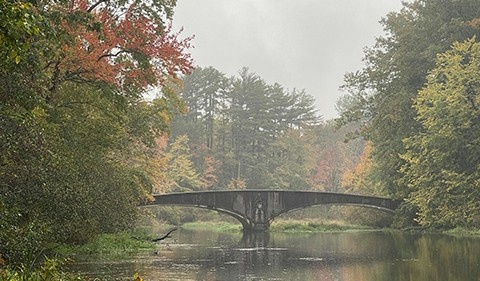
| The Assabet River flows through the town of Hudson providing a powerful reminder of why we want to protect the beauty the earth provides. Scientists are alarmed as we witness climate change happening. We need to do more to put a stop to the threat.
Join Green Hudson now to learn more. |
|
|
| |
|
|
| Green Hudson's monthly general meetings are open to the public and held the third Sunday of each month, from 6–7:30 p.m. at the Unitarian Church of Marlborough and Hudson, 80 Main Street in Hudson. Next meeting is February 15th. |
|
Recycling Volunteers Needed! Have fun! Meet your neighbors and make new friends while helping the planet. Recycling volunteers needed Saturdays. For more information: contact [email protected] |
|
|
| |
|
|
| You are invited Do you have suggestions for articles, resources of note, inspirations, relevant books to recommend, etc.? Send to [email protected] with the subject line "Green Hudson". Share Green Hudson’s Newsletter If you found something of value in this newsletter, please forward it to others who might be interested. And, if you’re reading someone else’s copy and would like to receive your own newsletter each month, please subscribe by emailing [email protected]. For more information on Green Hudson ... visit our website at www.greenhudson.org. |
|
|
| |
|
|