Green Hudson September Newsletter
͏ ͏ ͏ ͏ ͏ ͏ ͏ ͏ ͏ ͏ ͏ ͏ ͏ ͏ ͏ ͏ ͏ ͏ ͏ ͏ ͏ ͏ ͏ ͏ ͏ ͏ ͏ ͏ ͏ ͏ ͏ ͏ ͏ ͏ ͏ ͏ ͏ ͏ ͏ ͏ ͏ ͏ ͏ ͏ ͏ ͏ ͏ ͏ ͏ ͏ ͏ ͏ ͏ ͏ ͏ ͏ ͏ ͏ ͏ ͏ ͏ ͏ ͏ ͏ ͏ ͏ ͏ ͏ ͏ ͏ ͏ ͏ ͏ ͏ ͏ ͏

| Efforts to reduce food waste in Massachusetts inspire innovation and community action |
|
Massachusetts is a national leader in reducing food waste, according to a recent report authored by researchers at the University of Texas and the University of California-San Diego. But what policies brought on such success, and what efforts are advancing the state’s ambitious food-waste reduction goals?
|
|
One of the many noteworthy projects is a statewide investment in anaerobic-digestion facilities, says Bonnie Heiple, commissioner of the Massachusetts Department of Environmental Protection. Anaerobic digestors involve using microorganisms to break down food waste and convert it into an energy source.
|
|
|
| |
|
|
| “The grocery store that feeds food waste to its anaerobic digester uses the the resulting biogas to keep the lights on,” Heiple said. “So we, as the state environmental agency, are investing in grants and supporting construction of that infrastructure and building the transportation capacity to get food waste to these great facilities.”
|
|
|
| |
|
|
| When technology and new policies intersect, it’s easy for local businesses dealing with food waste to get lost in the resulting technicalities. That’s why Lorenzo Macaluso, chief growth officer at the Center for EcoTechnology, says it is necessary to educate Massachusetts residents on the environmental, social and economic opportunities of addressing food waste, and then to help people and businesses follow through on implementing strategies.
|
|
|
| |
|
|
| “So not just making those recommendations, but then holding their hand through the process of implementing them at their facility,” Macaluso said. “We’ve helped hundreds and, at this point, thousands of businesses implement this, so we can help make sure that they do it smoothly and not make some errors that others have made.”
|
|
|
| |
|
|
| Despite innovation, the issue of food waste persists. Heiple notes that Massachusetts residents still throw out nearly 1 million tons of food every year.
|
|
|
| |
|
|
| Another approach against food waste in Massachusetts involves saving food before it is thrown out at all, so that composting and anaerobic digestion become unnecessary. Caroline Pam, co-executive director of Island Grown Initiative, said the organization drives volunteers to “glean” — collect extra, often wasted, crops from harvests — around Martha’s Vineyard.
|
|
|
| |
|
|
| Since 2019, the number of households in Massachusetts with very low food security has quadrupled. Pam said Martha’s Vineyard is not immune to that growing trend, given the high cost of living on the island.
|
|
|
| |
|
|
| “One in five of our year-round residents on the island are clients at the island food pantry,” Pam said. “So we’re truly trying to address food insecurity on the island by making certain that all the food that’s grown on our farms finds its way to people who need it.” |
|
|
| |
|
|
| As local efforts ramp up and remain united by wider policies, hope for combatting food waste around Massachusetts remains. On the Vineyard, Pam notes that students are increasingly excited to preserve food, bringing hope to the island-wide effort. Although it may be a challenge to reach zero waste on the mainland, Pam says she’s optimistic about the prospect on the island. “We’re ready,” Pam said. “I think we can do it here.” |
|
|
| |
|
|
| The Climate and Energy Committee |
|
|
| |
|
|
| The Education and Outreach Committee–IMPORTANT NOTE: Unfortunately, federal government rebates for the purchase of EV's will end September 30th of this year. This makes *now* a key time to buy an EV. Need help getting started? Contact Green Energy Consumers or their specific EV info group: [email protected].
|
|
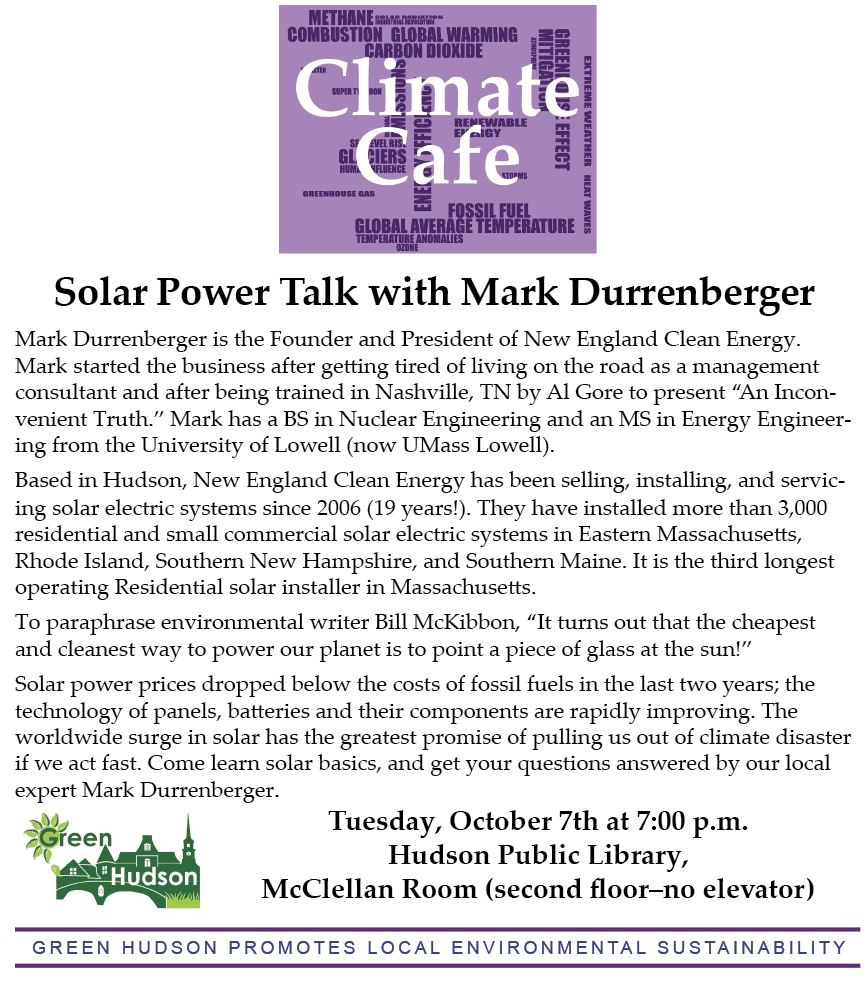
We are restarting our Climate Cafes on October 7th! You'll find a full description elsewhere in this newsletter. We are so pleased to have Mark Durrenberger join us. He's a longtime solar advocate, and a solar energy entrepreneur and expert here in our own town. Mark has seen the ups and downs in the industry (and the politics). Right now, solar is gaining momentum and dropping in cost, so this is a great time to learn more about it. Other countries are way out in front on this–it's time for us to learn from them and bring this home. |
|
Later in the fall, we'll hear from OARS, a local non-profit who (among other things) organize events for attending to the health and cleanliness of the Sudbury, Assabet, and Concord Rivers (SuAsCo). They do so much more. Please follow the link to see some of the work OARS has done for our rivers–something we all benefit from. See next month's newsletter for more details on their visit. |
|
|
| |
|
|
| The Plastic Reduction Committee. As we enter the fall season and we bring out our fleece coverings, let’s look at clothing and its microplastic content, how we can decrease our exposure, and the amount that we put into our water and air. One load of laundry has the potential to release millions of microfibers, many of which consist of microplastics.
|
|
|
| |
|
|
| - Most clothing is either entirely made from or includes some amount of plastic including polyester, spandex, Lycra, nylon, fleece, as well as all blends that include these plastic materials, (aka synthetic materials). Try to choose clothes made from natural fiber like cotton, wool, or linen.
- When you wash clothes, towels, curtains, etc., made from synthetic materials, choose the cool setting and line dry them, if possible because heat causes plastics to break down and shed more readily.
- Only wash clothing that is dirty, make your loads are as large as possible to reduce friction, and use less soap. Top loading washers also cause more friction than front loaders.
- Water treatment plants catch some but not all microfibers. The rest are turned to sludge which often ends up back in fields and waterways.
|
|
|
| |
|
|
| For more information and details on filters and other devices to cut microfibers in the wash, check out this PBS article printed in 2024:
|
|
|
| |
|
|
| The start of the Plastics Reduction Bylaw is January 1st. It is coming up fast. With the help of the Health Department Green Hudson will be educating local restaurants and businesses. Some are already sending questions to our website. Please join us in our efforts if you can. [email protected]. Thanks.
|
|
|
| |
|
|
| "Greening Your Finances" Webinar |
|
|
| |
|
|
| Whether you missed the April 1st original "Greening Your Finances" webinar or the Green Hudson Climate Cafe on May 27th with Sia Stewart and Tom Rawson, co-chairs of the Third Act MA Finance and Pensions team, discussing personal finance and the climate, here's your opportunity to register for the "Greening Your Finances" webinar on Sept. 25th at 1:00 p.m. |
|
|
| |
|
|
| You’ll learn: ✅ How to find a community development bank or credit union in your area. ✅ The best responsible credit card options. ✅ How to choose climate-smart insurance. ✅ Fossil-free investing strategies for your IRA, 401(k), and retirement funds. We’ll also introduce new tools and guides to help you make impactful financial choices. All registrants will receive a recording—so even if you can’t make it live, you won’t miss out. |
|
|
| |
|
|
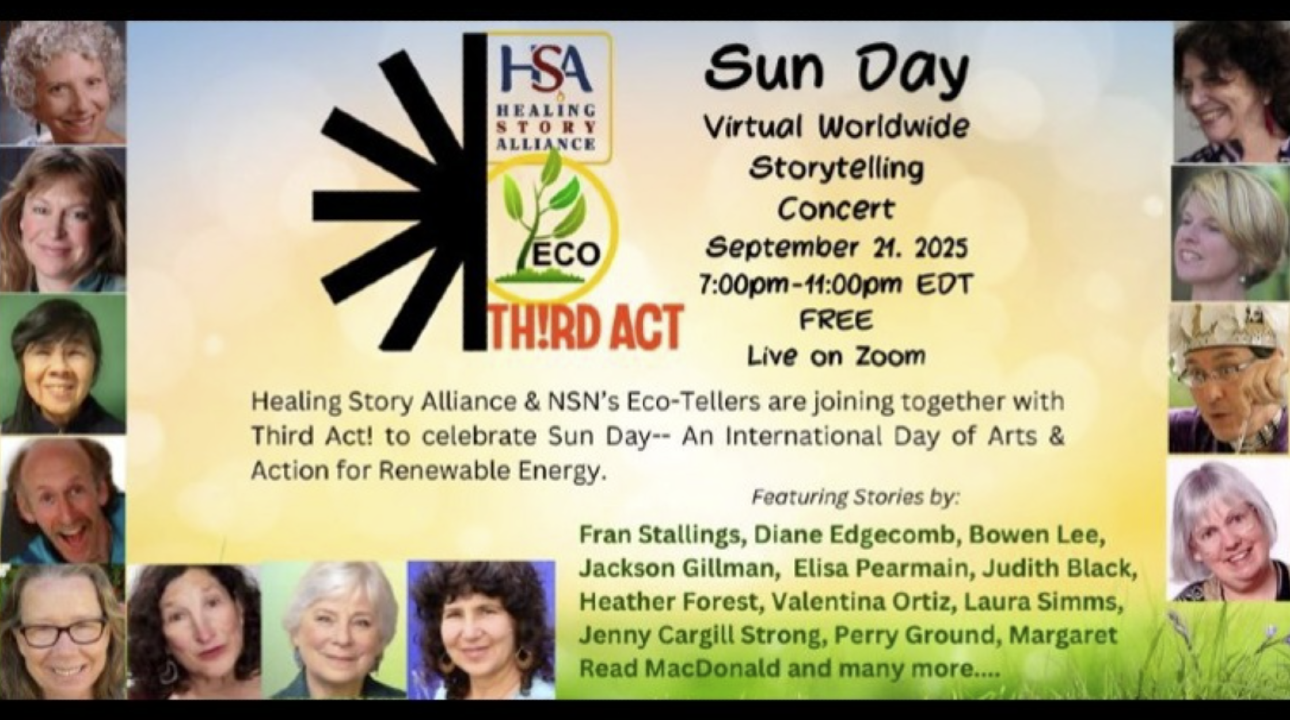
| What Are You Doing on Sun Day, September 21st? |
|
|
| |
|
|
| Celebrate the International Day of Arts and Action for Renewable Energy with a virtual, free Storytelling Concert! Register here. |
|
|
| |
|
|
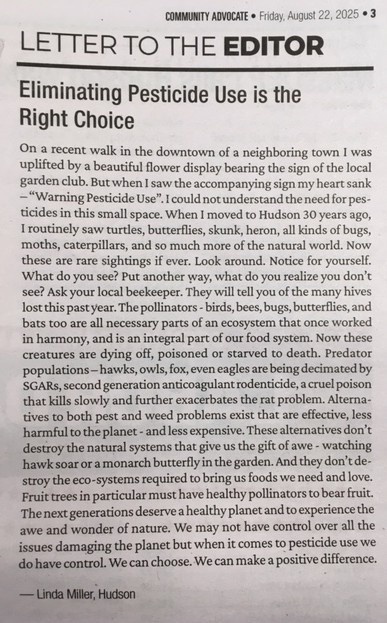
| LTE: Eliminating Pesticide Use is the Right Choice |
|
|
| |
|
|
| On a recent walk in the downtown of a neighboring town I was uplifted by a beautiful flower display bearing the sign of the local garden club. But when I saw the accompanying sign my heart sank–“Warning Pesticide Use”. I could not understand the need for pesticides in this small space. When I moved to Hudson 30 years ago, I routinely saw turtles, butterflies, skunk, heron, all kinds of bugs, moths, caterpillars, and so much more of the natural world. Now these are rare sightings if ever. Look around. Notice for yourself. What do you see? Put another way, what do you realize you don’t see? Ask your local beekeeper. They will tell you of the many hives lost this past year. The pollinators–birds, bees, bugs, butterflies, and bats too–are all necessary parts of an ecosystem that once worked in harmony, and is an integral part of our food system. Now these creatures are dying off, poisoned or starved to death. Predator populations–hawks, owls, fox, even eagles are being decimated by SGARs, second generation anticoagulant rodenticide, a |
|
|
| |
|
|
| cruel poison that kills slowly and further exacerbates the rat problem. Alternatives to both pest and weed problems exist that are effective, less harmful to the planet–and less expensive. These alternatives don’t destroy the natural systems that give us the gift of awe-watching hawks soar or a monarch butterfly in the garden. And they don’t destroy the eco-systems required to bring us foods we need and love. Fruit trees in particular must have healthy pollinators to bear fruit. The next generations deserve a healthy planet and to experience the awe and wonder of nature. We may not have control over all the issues damaging the planet but when it comes to pesticide use we do have control. We can choose. We can make a positive difference.
–Submitted by Green Hudson's own: Linda Miller. |
|
|
| |
|
|
| To discover safer alternatives to deadly pesticides, click here. |
|
|
| |
|
|
| Have you checked out Hudson Light and Power's rebates lately? There are a lot of them: Maybe it's the time to get battery-powered lawn mowers or any Energy Saver appliance. Check out the options: https://www.hudsonlight.com/rebates
|
|
|
| |
|
|
| Green Hudson's next meeting will be at 6:00 p.m. on Sunday, September 21st, at the
Unitarian Church of Marlborough and Hudson 80 Main Street in Hudson or via Zoom. Agenda and zoom invites are sent out one week before meetings. |
|
|
| |
|
|
| Recycling Volunteers Needed! Have fun! Meet your neighbors and
make new friends while helping the planet. Recycling volunteers needed Saturdays. For more information: contact [email protected] |
|
|
| |
|
|
| The Assabet River flows through the town of Hudson providing a powerful reminder of why we want to protect the beauty the earth provides. Scientists are alarmed as we witness climate change happening. We need to do more to put a stop to the threat. Join Green Hudson now to learn more. |
|
|
| |
|
|
| You are invited Do you have suggestions for articles, resources of note, inspirations, relevant books to recommend, etc.? Send to [email protected] with the subject line "Green Hudson". Share Green Hudson’s Newsletter If you found something of value in this newsletter, please forward it to others who might be interested. And, if you’re reading someone else’s copy and would like to receive your own newsletter each month, please subscribe by emailing [email protected]. For more information on Green Hudson ... visit our website at www.greenhudson.org. |
|
|
| |
|
|