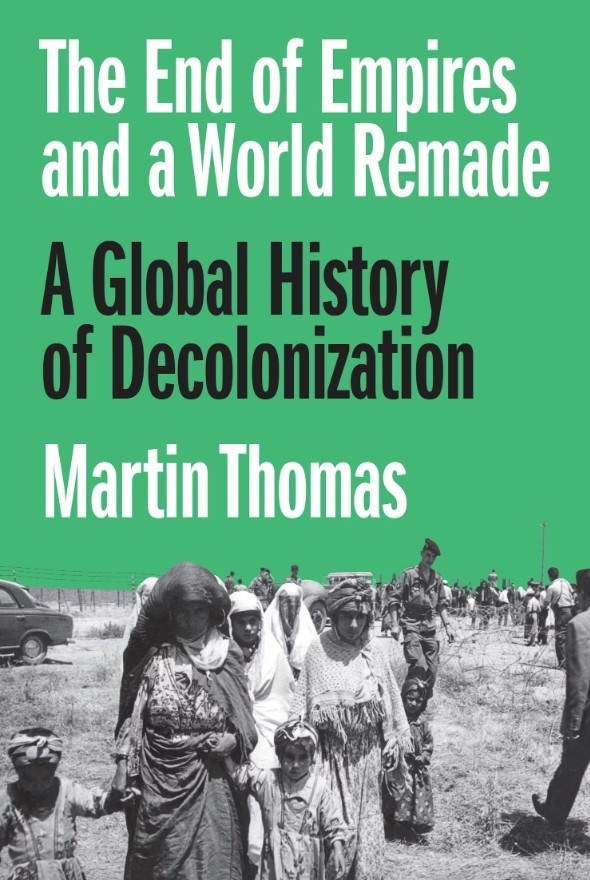
In this great book, Martin Thomas, a renowned historian of imperialism, explores how decolonization was not merely a local phenomenon but a global process that reshaped international politics, economies, and cultures.
He argues that while decolonization led to the emergence of new nations, it also left behind legacies of violence and economic dependency, as former colonial powers continued to exert influence over their former territories. He shows how decolonization was both a disintegrative force, breaking down colonial structures, and an integrative one, forging new transnational connections and networks.
One of the big claims of the book is that though there were some peaceful transfers of power, violence predominated, and decolonisation «occasioned many of the longest wars of the twentieth century». And another one is that «breaking with colonialism has been… messier, more attenuated and less final than independence ceremonies suggested».
Thomas provides a compelling narrative that underscores the ongoing impact of colonial legacies on contemporary global issues. With rigorous scholarship and engaging prose, Thomas offers fresh insights into the forces that reshaped the post-imperial world. Across 672 pages, he draws on a vast array of primary sources to provide a deeply researched and compelling account, making this an essential read for historians and political analysts alike.