| There are c. 780,000 single justice procedure (SJP) prosecutions every year in England and Wales, and the SJP makes up two thirds of magistrates’ court cases. The system has been going for ten years but is little known, partly because the courts are closed, partly because little data is published. Transform Justice has been trying to keep track of the system since its inception, and we have now published a report bringing together our research. The SJP is used for low level offences like having the wrong ticket for the train you are on, or not having a TV licence. Defendants receive their prosecution notice by post and are allowed and encouraged to respond by post or online. Cases where people plead guilty, or don’t plead at all, are judged by a single magistrate sitting alone, with a legal advisor on call to give advice. These are low level cases, so the stakes are lowish. SJP can only be used for summary non imprisonable offences and the vast majority of convictions are not recorded on the police national computer – so those convicted don’t get a criminal record. But they do get a criminal conviction, and will get a record if they do not pay the fine meted out. So the system needs to be fair, and prosecutions should be in the public interest. This is the test used by the Crown Prosecution Service (CPS) – cases first have to pass the evidential test, then the public interest test. The CPS test considers various factors, including the seriousness of the offence, the impact on the victim and community, and whether prosecution is the most appropriate course of action. Our research suggests that many SJP prosecutors don’t use this public interest test: - The SJP prosecutors (TV licensing, local authorities, DVLA etc) are also the victims so are not in a position to make an independent judgement of victim impact.
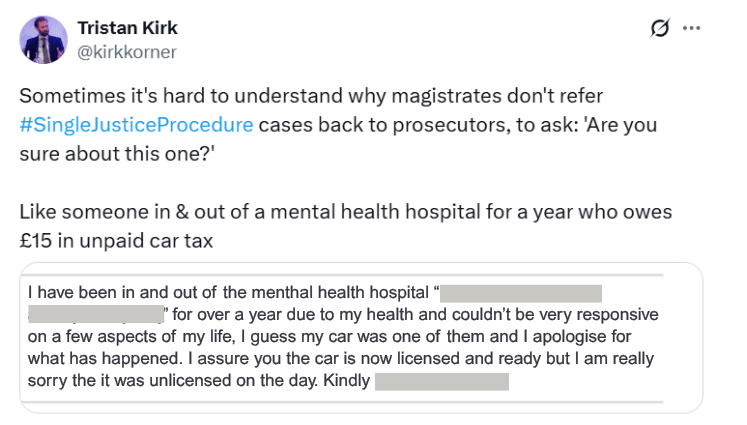
- Prosecutors usually don’t have information about the context of the offence or about the vulnerability/disability of the person accused. Evening Standard courts correspondent Tristan Kirk has obtained the actual forms completed by SJP defendants pleading guilty. They show that some (who knows how many) defendants are very vulnerable – so much so that in an equivalent low level case the CPS would probably not have pursued it.
|
|
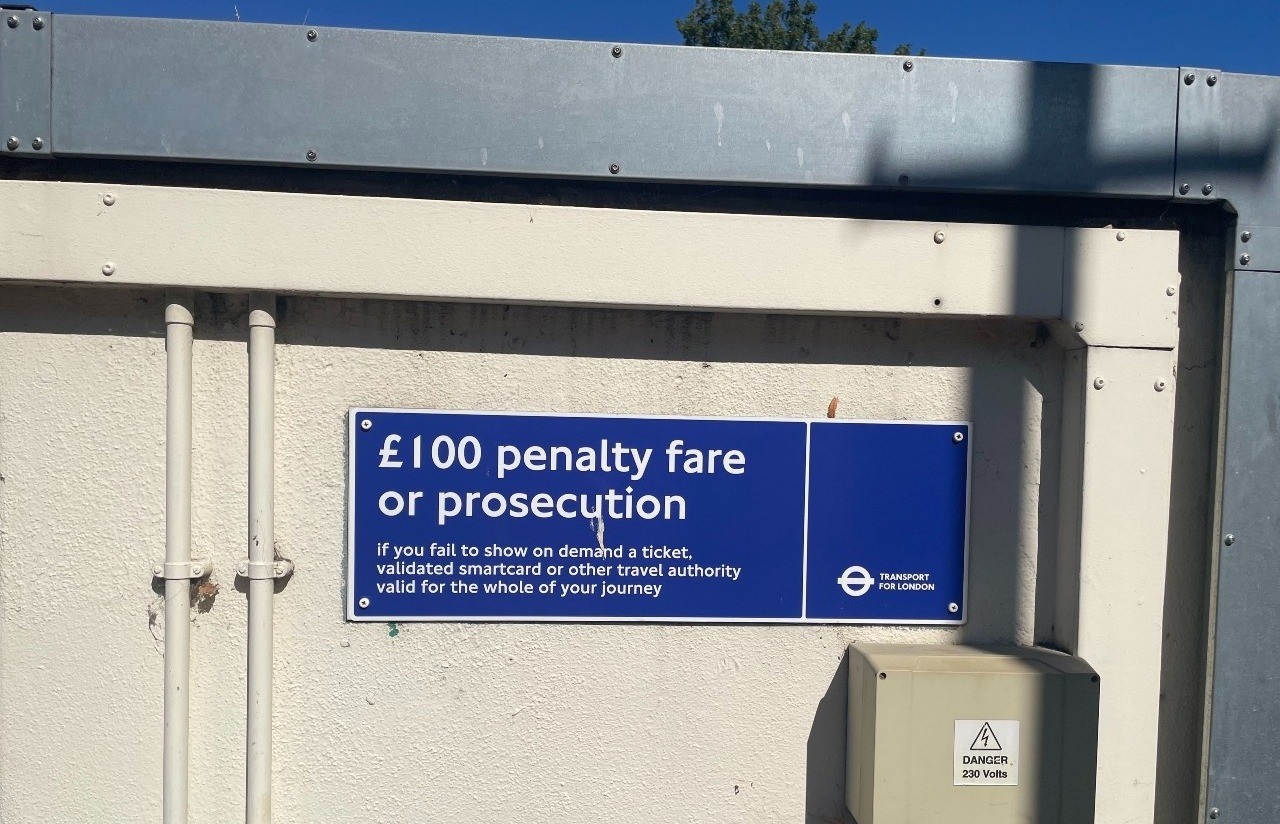
- SJP prosecutors pursue people for simple mistakes, arguably not the most appropriate course of action. Many SJP offences are strict liability, which means that it is irrelevant whether the person accused meant to do it. For strict liability offences there are a few specified defences, but these are the only ones that can be used. So if the ticket inspector finds you without the right train ticket, and you can prove all available ticket machines were broken at your departure station, you have a good chance of being acquitted. But if you just bought the wrong ticket by mistake, you can legally be convicted. Failing to ensure your child attends school regularly is a strict liability offence. A parent who is trying but failing to get their child to school can be convicted without the prosecution having to prove "intent" to commit that offence. We are not convinced that the prosecution of mistakes or of parents for their children's (non-criminal) behaviour is in the public interest.
The CPS has a code which it is obliged to follow, which includes detail on how to apply the public interest test. An inspectorate monitors compliance. But many SJP prosecutors don't have a published code, so it's not clear what their criteria for prosecution are. And their practice is not inspected. The Office for Road and Rail investigated prosecutions of people for fare dodging and not having the right ticket and found “there is no national or agreed industry policy or guidance to guide TOCs’ (train operating companies’) approach to prosecution, either at Great Britain-level or within any of its constituent nations… In their response to our request for information, some TOCs referred us to historic [out of date] documents.” It takes time and resources for the Crown Prosecution Service to apply the public interest test. And their compliance with it is often successfully challenged. But at least they have one. The government is preparing to reform the framework within which private prosecutors operate. Let’s hope private prosecutors will be required to justify that their prosecutions are in the public interest. And that they can be made accountable. For more on the single justice procedure, listen to our latest podcast episode, and read our newly published report: Industrial-scale prosecution? Why the single justice procedure needs radical reform. |
|
|
| |
|
|