͏‌ ͏‌ ͏‌ ͏‌ ͏‌ ͏‌ ͏‌ ͏‌ ͏‌ ͏‌ ͏‌ ͏‌ ͏‌ ͏‌ ͏‌ ͏‌ ͏‌ ͏‌ ͏‌ ͏‌ ͏‌ ͏‌ ͏‌ ͏‌ ͏‌ ͏‌ ͏‌ ͏‌ ͏‌ ͏‌ ͏‌ ͏‌ ͏‌ ͏‌ ͏‌ ͏‌ ͏‌ ͏‌ ͏‌ ͏‌ ͏‌ ͏‌ ͏‌ ͏‌ ͏‌ ͏‌ ͏‌ ͏‌ ͏‌ ͏‌ ͏‌ ͏‌ ͏‌ ͏‌ ͏‌ ͏‌ ͏‌ ͏‌ ͏‌ ͏‌ ͏‌ ͏‌ ͏‌ ͏‌ ͏‌ ͏‌ ͏‌ ͏‌ ͏‌ ͏‌ ͏‌ ͏‌ ͏‌ ͏‌ ͏‌ ͏‌
Is this email not displaying correctly? View it in your browser.
Image description
Image description

Demeter Newsletter -- April 2025


Greetings from Demeter!

In this issue:
+ Certification News

+ Remembering Manfred Klett

+ Feature: Salmon-Safe Certification

+ Standards Feature: Biodynamic Preparations

+ Research: Silicon Uptake and Bioavailability

+ Staff Corner: Soil Intelligence

Please send newsletter content suggestions or questions to: [email protected]


Certification News


🌿 Thank You for Renewing with Demeter for 2025! 🌿


2025 renewals were due on April 1st, and we want to extend a heartfelt thank you to each and every one of our licensees who renewed with Demeter for the upcoming year. Your continued partnership means the world to us and helps us to continue our certification work and spreading awareness of Biodynamic Certification!


It’s been a busy but rewarding season, with renewal forms steadily flowing in. I’ve truly enjoyed the chance to connect with so many of you—whether through emails, calls, or quick questions. These moments of communication not only help ensure everything is in order, but they also give me the opportunity to engage with you directly, which is something I genuinely value.


Thank you again for your trust, your time, and your commitment to the Demeter mission. We’re excited to move into another year together!


🌿✨2025 Inspections Are Underway!

While spring isn’t our busiest inspection season, a few important inspections are already in motion!


One of our long-standing and dedicated Demeter inspectors, Caroline Waters, has been on the road recently, traveling across the country to conduct inspections for new farms that will be joining the Demeter program this year.


We’re excited to welcome these new farms into the fold and appreciate Caroline’s continued hard work and commitment to ensuring our standards are upheld from day one.

Stay tuned—there’s much more to come as the season progresses!


Warmly,
The Demeter Team 😊


Questions about certification?

Please contact Sarah: [email protected].

Calling all

Photographers!

Image description

Demeter would love to feature your photos, with full credit, on our website, newseltter, social media, brochures, etc. Demeter is working with a graphic design company to redesign our website and develop a cohesive exhibit booth for taking on the road to conferences and expos. Our partner organization BFDI (Biodynamic Federation Demeter International) is also seeking high resolution photos. If you are willing to share some nice shots of your farm, products, or facilities, we need your photos and would love to put them to good use in spreading the word about certified Biodynamic agriculture and products! Please email high resolution images to: [email protected].


Notes from the Field...

We are reserving a spot in each of our newsletters to feature a farmer or other certified business owner. If you'd like to write a brief article about your experience with Biodynamic Production, Processing, or Marketing, or answer some interview questions about your operation, we'd love to share it with our readers!


Please contact Nell at [email protected] for more details.


Image description

Remembering Manfred Klett, 1933 - 2025


The global Biodynamic community lost a luminary this month with the passing of Manfred Klett, Biodynamic farmer and former head of the Section for Agriculture at the Goetheanum.


History and tributes have been collected by the Biodynamic Association on a Commemoration Page. This page also includes several articles written by Manfred for the Biodynamics journal.


Additional memories and contributions are welcomed. Please email [email protected].

Image description


Did You Know….?


Demeter partners with Salmon-Safe Eco-labeling to provide both Biodynamic and Salmon-Safe Certifications for Farmers


If a farm is Demeter-certified, it can use Salmon-Safe labeling on its products with no additional fee or other requirements.


The Demeter Farm Standard has always focused on the stewardship and improvement of the wider ecosystem, including protection of waterways and surrounding lands. Seeing an opportunity, Demeter and the eco-label Salmon-Safe collaborated to develop criteria that allow for joint certification for producers that wish to use both labels. Additional requirements for riparian area management, wetland protection, and irrigation water use were added to make fish habitat and water protection more explicitly outlined in the Demeter Farm Standard, based on scientifically-backed conservation principles.


Salmon populations on the west coast have been declining for decades, with some species' populations diminished by as much as 90%. The salmon lifecycle is a unique one, comprising time in both fresh and saltwater habitats. Salmon hatch in inland headwaters, rear in streams, then head down to the estuaries where they gain enough size to survive in the ocean. They later return to their original headwaters to spawn, beginning the cycle all over again. This diversity of habitat and ability to assimilate to both fresh and salt environments is fascinating and miraculous, but also leave salmon populations vulnerable to any disruption to habitats along their out-and-back migration. Today's salmon face many challenges, including point and non-point source pollution, habitat degredation, dams and other barriers, and climate change.


Farming can be an opportunity to restore ecosystems and natural processes that have been altered and damaged through human activity. Biodynamic farmers take this more seriously than most, endeavoring to integrate economic activities with those of the natural world to a point where plants and wildlife can thrive alongside agricultural systems. Due to the interconnected nature of all life within any given watershed, we see land use in one geographic location affecting key species like salmon throughout their freshwater breeding areas. The Demeter / Salmon-Safe partnership provides an additional tool for farmers looking to protect freshwater habitats and promote their ecologically responsible methods through effective labeling.


“The farmer lives and works in the meeting place of nature and the human economy. Farmers either fit their farming to their farms, conform to the laws of nature, and keep natural powers and services intact-or they do not. If they do not, then they increase the ecological deficit being charged to the future.” -- Wendell Berry


Demeter Standards Feature


Links to the Demeter Farm and Processing Standards can be found on our website's home page: Demeter USA Farm and Processing Standards


The Biodynamic Preparations


Nine preparations made from herbs, mineral substances, and animal manures that are utilized in field sprays and compost inoculants are a distinguishing feature of Biodynamic agriculture.


Biodynamic preparation use is required for Biodynamic certification.


Sources

Ideally Biodynamic preparations are made on the farm where they are to be used. The ingredients, such as the plant materials and the animal sheaths are also produced ideally on the farm utilizing the core principles of the Biodynamic method in a comprehensive manner.


If you do not have experience making the preparations, it is recommended that you learn how to produce them prior to making them on your own. In the interim or if you choose not to make the preparations, they are available from approved companies that distribute the preparations nationally or through established regional preparation making groups. The Biodynamic community has many farmers who have extensive experience making and utilizing the preparations and are eager to share that knowledge. Please contact the Demeter office for a list of resources and companies approved to commercially distribute the Biodynamic preparations.


Stirring

Hand stirring is preferred and should be done consciously. Flow forms and stirring machines may also be used but the farmer should still maintain conscious contact with the stirring process.


Application

The compost preparations need to be applied to acreage to be harvested either via applications of Biodynamic compost or via an approved field spray or compound preparation. At a minimum, either Biodynamic compost or an approved field spray needs to be applied at least once every three years.


Preparations 500 and 501 need to be applied at least annually to all harvested crops. Preparation 500 should be applied in the later part of the day in the form of droplets that come in contact with the earth. Preparation 501 should be applied in the early morning hours as a fine mist that settles down onto crop foliage.


Application rates for the field sprays are ¾ – 4 ¼ ounces/acre for 500 and 1 -2 gram/acre for 501. Typical application rate is ¼ -½ tsp. of each compost preparation per 13 cubic yards of compost or deep litter manure/slurry. Typical application rate of a compound preparation like Barrel Compost is applied at ½ cup/acre.


Storage

Biodynamic preparations should be stored in a vessel that allows for the presence of oxygen. These vessels should be stored in a vessel made of natural material surrounded by peat or some other similar insulating material. The condition of the stored preps should be checked regularly. The preparation 501 should be stored in a vessel (such as a glass jar or horn) in a sunny location. Storage of all the preparations should be placed in a location free of electromagnetic fields (such as measured by a Gauss meter).


Safety

If preparations are made on the farm careful records are kept of the entire production process so that checks can be made of the following:

  • The origin of the organ material (abattoir, type and origin of the animal, quantities)
  • Site where preparations are being made (sketch of site)
  • Date of insertion in the soil and of its extraction
  • Record of disposal of any remains.

Records will be checked as part of the regular Demeter inspection. Animal organs used need to be of appropriate quality.

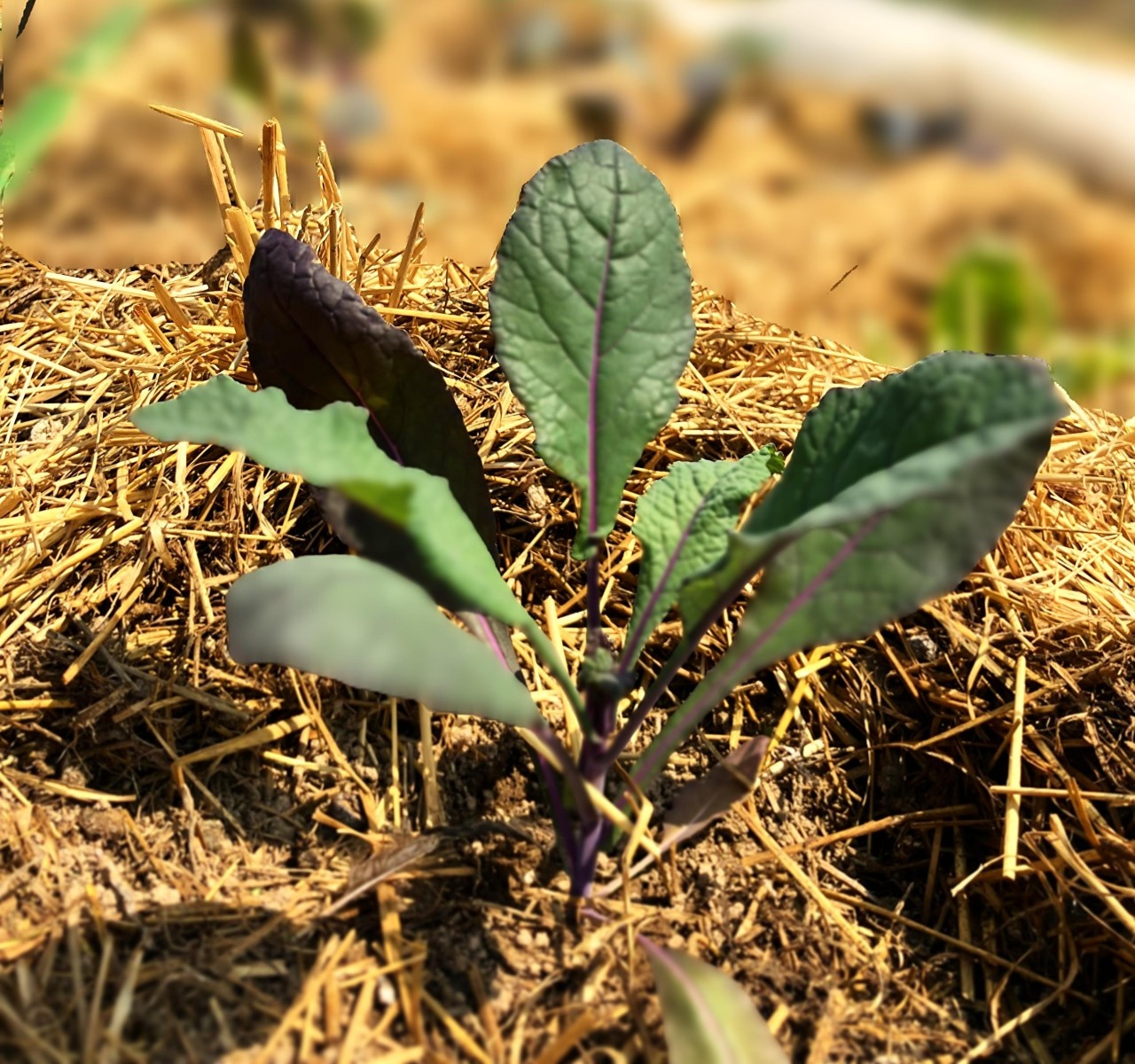
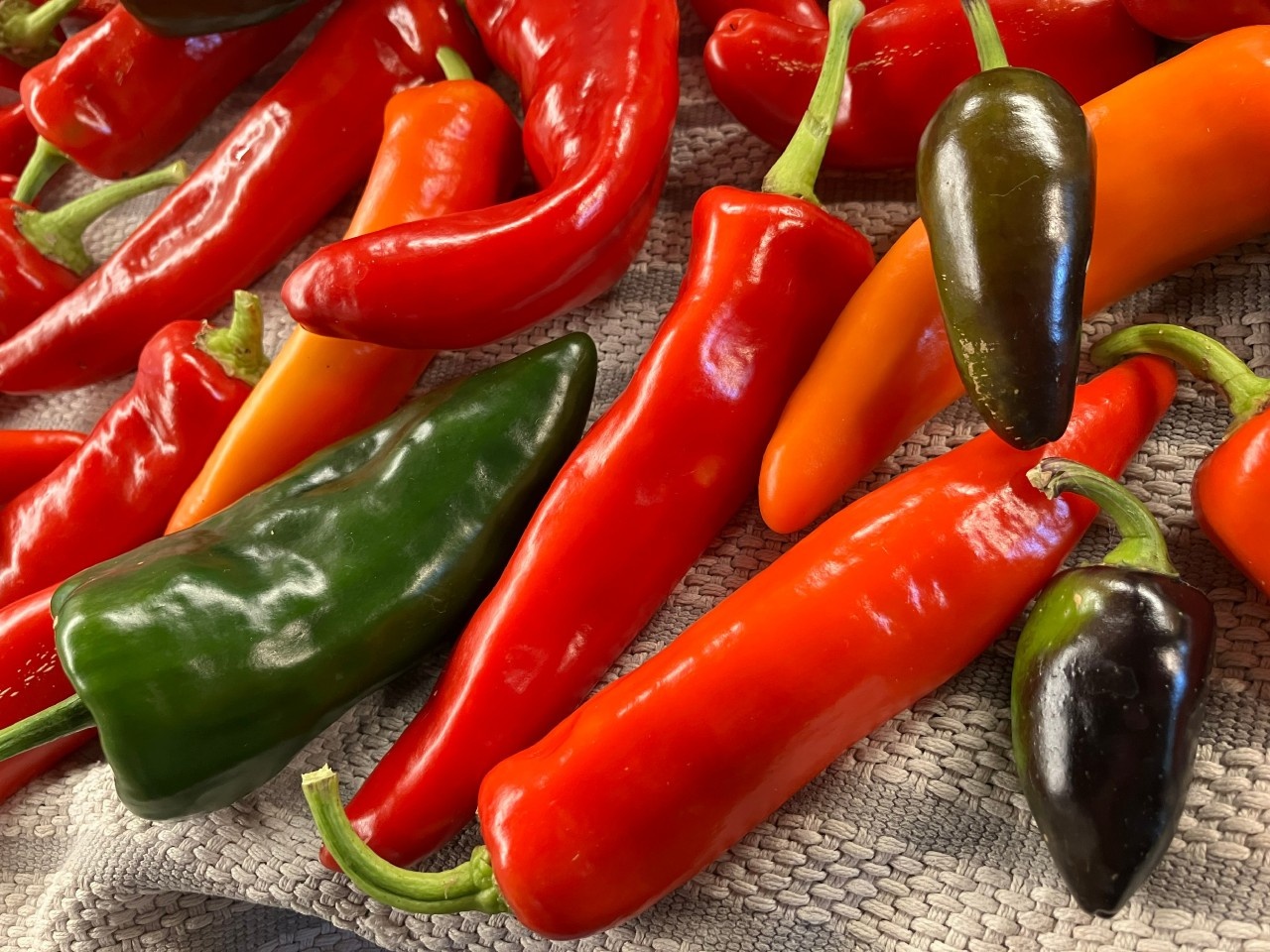
Image description

- Staff Corner -


Evrett Lunquist

Director of Certification

Visiting Churchtown Dairy with Jennie and Jean-David.


Biodynamic Preparation Brings Intelligence to Soil


One fundamental of Biodynamic certification is the use of Biodynamic compost and field spray preparations. These preparations pose a challenge for many people to learn what they are and how they work and are often mischaracterized by those who do not understand them. Understanding the Biodynamic preparations may best be thought of as a journey rather than a destination.


Early in my introduction to Biodynamics, one of Rudolf Steiner’s references in the Agriculture Lectures about the preparations puzzled me. He was talking about making and using the Stinging Nettle compost preparation.


“When you add this to your manure – just like the other preparations – the effect will be to make the manure inwardly sensitive and receptive, so that it acts as if were intelligent and does not allow decomposition to take place in the wrong way or let nitrogen escape or anything like that. This addition not only makes the manure intelligent, it also makes the soil more intelligent, so that it individualizes itself and conforms to the particular plants that you grow in it. Adding Urtica dioica [editor’s note: Latin name for Stinging Nettle] in this form is really like an infusion of intelligence for your soil.”


Referring to manure and soil as intelligent seemed odd to me when I read this 30 years ago. I have found importance in letting things sit without judgment when reading Steiner’s indications. Not the same as accepting without critical thinking, just not ruling something as ridiculous, if it initially seems odd.


Years later and with huge advancements in human understanding about microbial/plant interactions, it is now well known that microbes can access soil minerals that are unavailable to plants and that plants can feed microbes with sugars from photosynthesis in exchange for these plant available minerals from the microbes. This exchange occurs in biologically active soils when water-soluble soil nutrient levels are below the needs of the plants. Plants selectively feed microbes for specific soil nutrients needed.


One common understanding of the Biodynamic Preparations is that they increase the population and influence the types of microbes present in the soil. Steiner referred to the soil as “individualizing itself and conforms to the particular plants…”


Now I have a curious thought. Human awareness of soil microbes was in its infancy 100 years ago when Steiner gave these founding lectures, and our current knowledge developed alongside new terminology. Blending what we now know and revisiting what Steiner indicated, it seems to me that plants and soil microbes communicating with each other about their needs sounds a lot like intelligence.


Research Focus


Silicon Uptake in Agricultural Crops

The important role of soil microbes


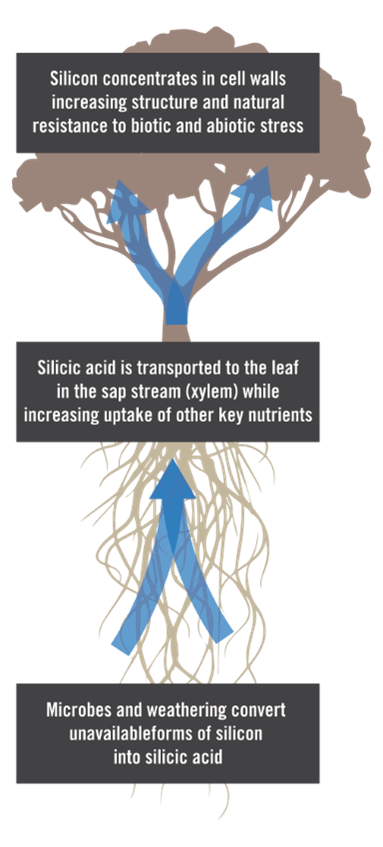
Silicon is the second most prevalent compound on earth, and in an available form, is highly beneficial to plants. Steiner recommended farmers apply regular applications of a mineral form of silicon – generally ground quartz – as well as two plant-based preparations from plants known to be high in silicic acid: Stinging Nettle (Urtica dioica) and Horsetail (Equisetum arvense).


Current research indicates that soil microbes play a crucial role in facilitating silicon uptake in plants. Biodynamic preparations such as the Horn Manure are shown to increase populations and variety of microbes in the soil, potentially aiding in better assimilation of silicon for crops.

Image description

According to a 2018 article in the American Journal of Plant Sciences, “Accumulation of silicon beneath the cuticles fortifies the cell wall against pathogen attack [and]....alleviation of heavy metal toxicity in plants.Silicon further improves growth and physiological attributes under salt and drought stress. Effective use of silicon in agronomy can be an alternative to the prevalent practice of traditional fertilizers for maintaining sustainable productivity. Therefore, soil nutrition with fertilizers containing plant-available silicon may be considered a cost-effective way to shield plant from various stresses, improve plant growth as well as yield and attain sustainable cultivation worldwide.”


Not all forms of silicon are available for plant uptake, however. In fact, only silicic acid, in monomer form, is useable, and this form is not the most prevalent form of silicon in the soil.


“There are two ways by which Si is bioavailable to the roots. First, (A) the involvement of microbiome species improves the weathering process. Second, (B) substrate utilization enhances silicate mineral weathering using specific alkali and transition metals.


"Thus, we can hypothesize that microbiome diversity can play a central role in the ionization of silicic acid, cation bridges, and carboxylation, which can help Si assimilate in the rhizosphere [the root zone]. However, the molecular mechanisms by which microbes adapt to Si sequestration under varying soil compositions and stress conditions need thorough investigation. More knowledge is needed on how the Si bioweathering process is initiated by chemical(s) or microbial homeostatic processes to ensure the bioavailability of Si. Thus, soil biogeochemistry and the role of microbes in Si assimilation and transport are essential but overlooked research areas.” (Reference: Silicon: A valuable soil element for improving plant growth and CO2 sequestration - ScienceDirect May 2024)


In Biodynamic systems, microbial enhancement can occur through use of the Preparations, particularly the horn manure. The brewed or fermented preparation of Equisetum arvense (508) is another source of both silica and microbial inoculation.


Management practices such as incorporation of cover crops that result in high levels of organic matter in the soil also result in abundant populations of microbes. The process of burying the horn silica for the duration of the growing season may also allow microbes and weathering to occur to the material in advance of its application to Biodynamic crops.


Biodynamic growers must work with the natural processes available to them to make full use of the benefits of the horn silica and other silica-rich Preparations. An understanding of the best methods of application and pathways of plant uptake can help guide farmers in their application strategies.


~ CALENDAR ~


If you'd like your event announced in our monthly newsletter, please send details to: [email protected]


Free Spring Biodynamic Farming Workshop

May 10th from 1:00 - 4:00

BeeWilder Farm, Spring Mills, PA

For details: Spring Biodynamic Farming Workshop


▪▪▪▪▪▪▪▪▪▪▪▪▪▪▪▪▪▪▪▪▪▪▪▪▪▪▪▪▪▪▪▪▪▪▪▪


The Basics of Biodynamics / French Intensive Horticulture

May 17th - May 18th

Warren Wilson College, Swannanoa, NC

For details:The Basics of Biodynamic/French Intensive Horticulture


▪▪▪▪▪▪▪▪▪▪▪▪▪▪▪▪▪▪▪▪▪▪▪▪▪▪▪▪▪▪▪▪▪▪▪▪


Spring Preparation Making - Oregon Biodynamic Group

May 18th

Montinore Estate, Forest Grove, Oregon

For details: Spring Prep Making


▪▪▪▪▪▪▪▪▪▪▪▪▪▪▪▪▪▪▪▪▪▪▪▪▪▪▪▪▪▪▪▪▪▪▪▪


You can find many more events on the Biodynamic Association's

Event Calendar:

BDA Community Calendar


▪▪▪▪▪▪▪▪▪▪▪▪▪▪▪▪▪▪▪▪▪▪▪▪▪▪▪▪▪▪▪▪▪▪▪▪


Demeter Business Meetings:

Demeter Standard Committee – meets the 2nd and 4th Tuesday of the month


Demeter Board – meets the 3rd Monday of the month

Image description

Demeter Association, Inc.

317 Church Street
Phoenixville, PA 19460


www.demeter-usa.org

Facebook: Demeter USA Instagram: demeter_usa

If you would like to unsubscribe, please click here.
Powered by Sender.net