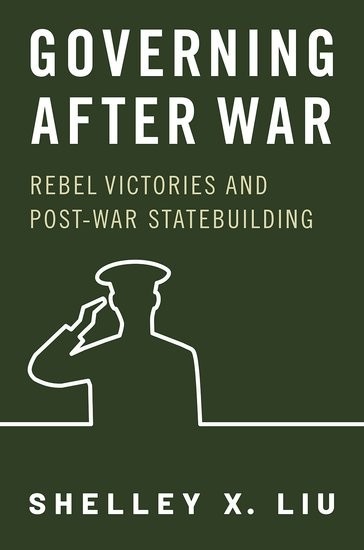
In Governing After War, Shelley X. Liu advances a compelling framework that repositions our understanding of how rebel victors transition into stable—or not—post-civil-war governments. Departing from prior studies that emphasize quality of wartime governance or local loyalties, Liu spotlights the strategic deployment of state resources—development and coercion—across a country’s subnational terrain as the linchpin of postwar consolidation.
Her theory proposes that successful rulers neglect their wartime strongholds, instead investing in development infrastructure (schools, bureaucracy, health services) in previously unsecured areas to win over undecided populations, while reserving coercive mechanisms for rival zones with lingering threats. The model, rooted in rational-choice logic, stems from two richly detailed mixed-methods case studies—Zimbabwe (Liberation War, 1972–79) and Liberia (civil war, 1989–96)—and gains further traction through comparative insights from Angola, Côte d’Ivoire, Rwanda, and Burundi.
Liu’s nuanced argument has earned high praise from scholars: Scott Straus calls it a “quantum leap forward in scholarship on post-war politics,” lauding its “counterintuitive theory about how rebel victors balance security and development priorities. Another key strength lies in Liu’s empirical rigor: she skillfully combines interviews, archival sources, fine-grained census, administrative, survey, and conflict data to analyze variations across territories and link wartime ties to postwar strategy).
That said, some critics may point to the model's abstraction—arguing it might overstate the rationality of rulers or insufficiently account for complexities like the number of rival factions—as worthwhile areas for further refinement. Still, Liu's work offers tangible, falsifiable hypotheses and a rich analytical foundation for scholars of state-building, civil conflict, and African politics.