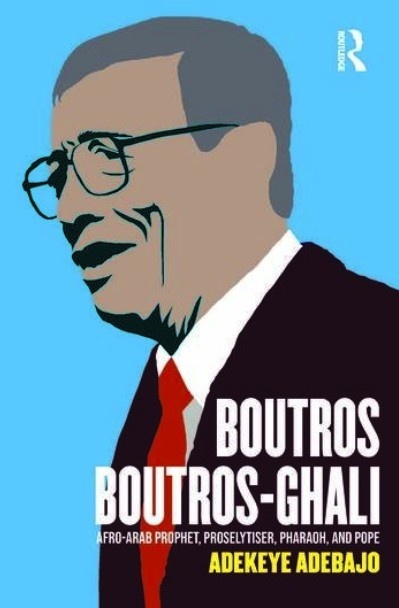
Adekeye Adebajo’s book is a meticulously researched and intellectually engaging reassessment of one of Africa’s most complex international statesmen. In just 138 pages, Adebajo condenses a lifetime of diplomacy, conflict, and vision into a biography that is as political as it is personal. Through vivid prose and careful archival detail, he reconstructs Boutros Boutros-Ghali’s journey from an elite Egyptian Coptic background to his historic yet turbulent tenure as the first African United Nations Secretary-General.
Adebajo’s central argument—that Western scholarship has too often minimized Boutros Boutros-Ghali’s intellectual and diplomatic contributions—is persuasive and timely, particularly as it exposes the racialized double standards that shaped global perceptions of his leadership during the post-Cold War era. The book’s greatest strength lies in its framing of Boutros Boutros-Ghali’s identity and vision through three layered metaphors—“proselytiser”, “pharaoh”, and “pope” -each capturing a dimension of his philosophy and style. As a proselytiser, he championed multilateralism and Afro-Arab cooperation; as a pharaoh, he wielded authority and strategic finesse rooted in his Egyptian heritage; and as a pope, he stood as a moral and intellectual conscience of international diplomacy.
Adebajo highlights how BoutrosBoutros-Ghali’s independence—especially his insistence on a stronger, more autonomous United Nations—brought him into direct conflict with the United States, ultimately leading to Washington’s veto of his second term. These tensions illustrate the paradox of an African diplomat who sought to reform global governance yet found himself constrained by the very power structures he aimed to challenge. Though deeply sympathetic, Adebajo does not shy away from Boutros Boutros-Ghali’s shortcomings, including his limited political maneuverability and sometimes aloof leadership style.
The book’s dense engagement with UN politics may challenge general readers, but for scholars of African studies and international relations, it offers invaluable insight into the intersections of race, diplomacy, and global power. Ultimately, "Boutros Boutros-Ghali: Afro-Arab Prophet, Proselytiser, Pharaoh, and Pope" stands as both an act of intellectual restoration and a broader meditation on Africa’s ongoing struggle for agency within international institutions. It is a fitting tribute to a statesman who, as Adebajo compellingly argues, dared to speak truth to power—and paid the price for doing so.