This month, I couldn't possibly choose just one book. Really, I'm cheating in like three different ways: I'm choosing two books, but really I'm choosing four books because one of those two is in a series, and I read three of the books in that series this month. Except really I'm choosing the entire series because I read the first two last month. So it's really like six books.
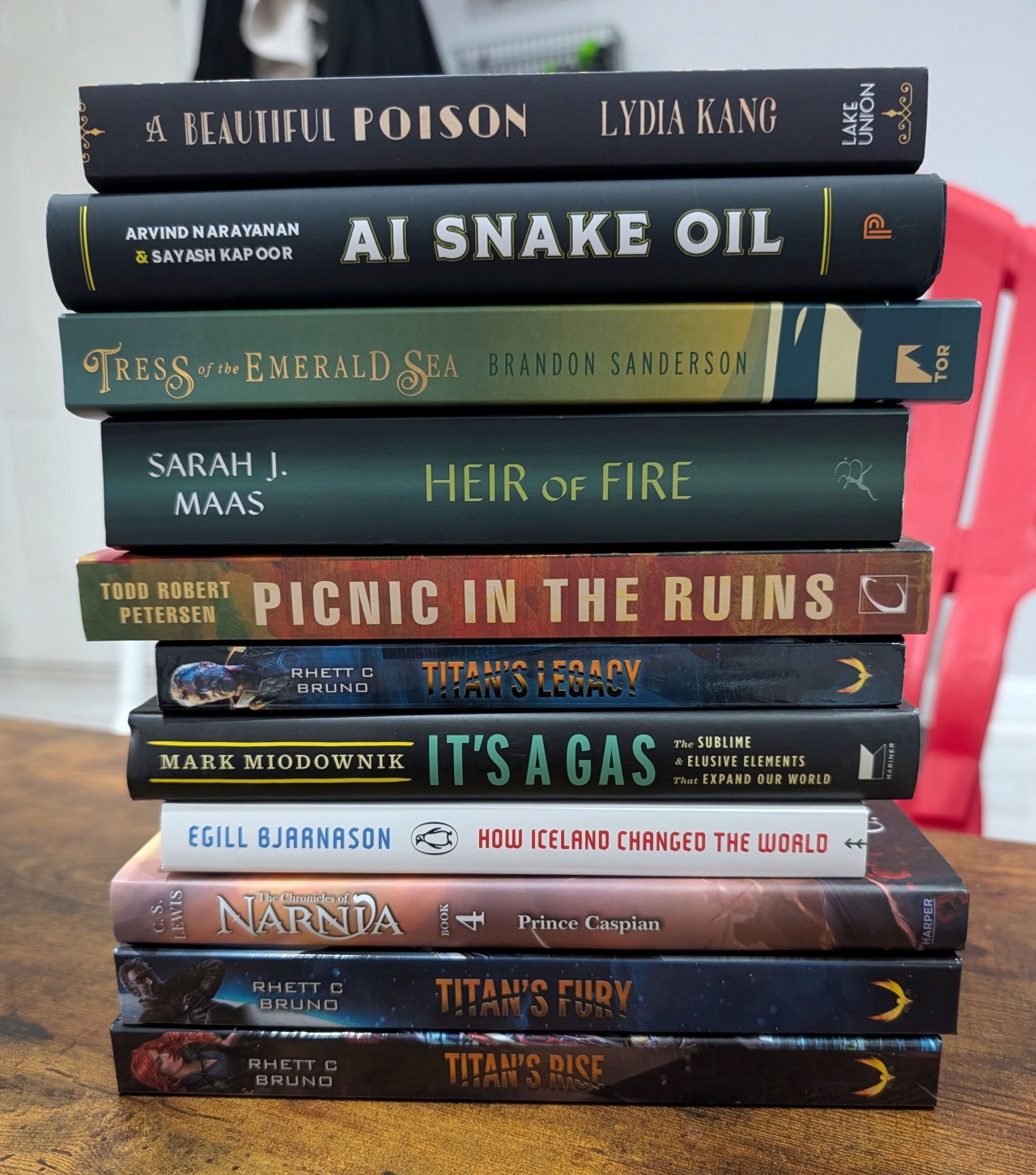
But anyway: first, the entire Children of Titan series—Titanborn, Titan's Son, Titan's Rise, Titan's Fury, and Titan's Legacy—is fantastic. I'd compare it to a mixture of Star Wars and Dune, with something else thrown in there as well that I can't put my finger on. The narration (I did the audiobooks) is phenomenal, although I wish the first two books were merged and split: the series is written with book 1 and 5 from one character's point of view, book 2 from a different, and book 3 and 4 in alternating point of view; I would have rather had book 1 and 2 follow the alternating format of 3 and 4. But that's a nitpick. Overall, one of my favorite series.
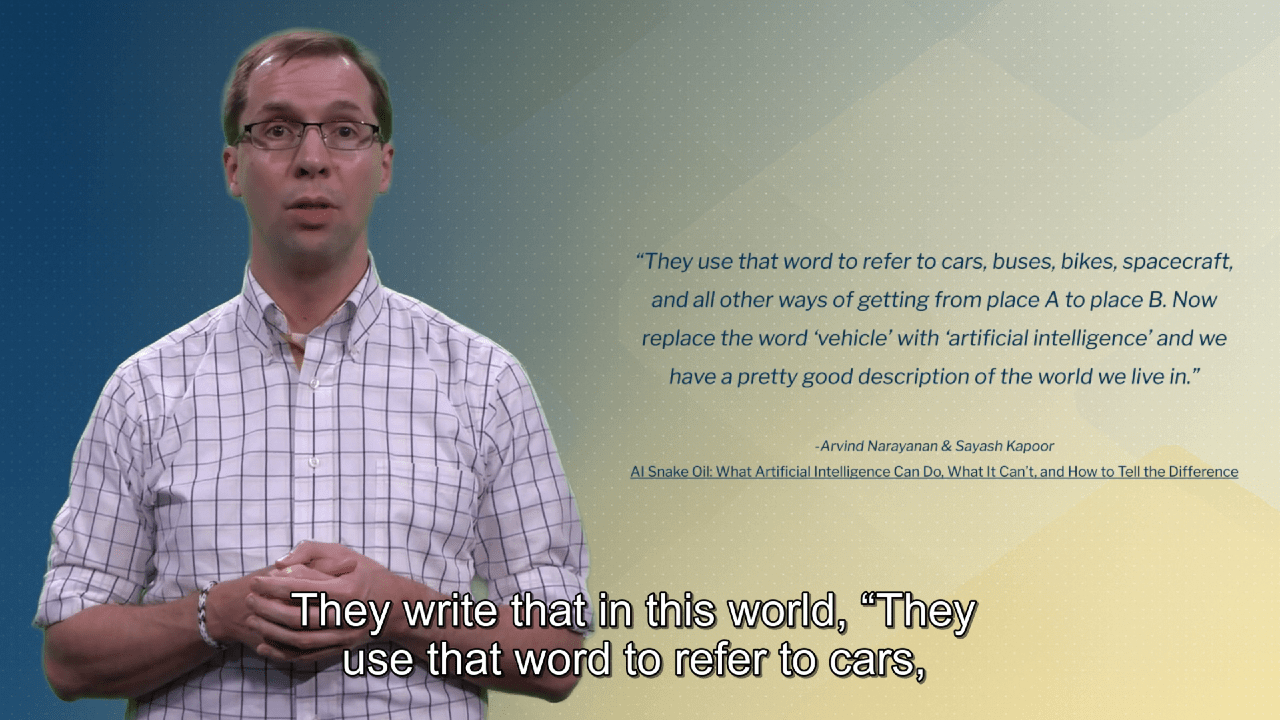
Then of course, AI Snake Oil: What Artificial Intelligence Can Do, What It Can't, and How to Tell the Difference by Arvind Narayanan and Sayash Kapoor. I wrote about it above and in my blog, so I won't say more here, but it was phenomenal. I'll also note it introduced me to one of my favorite quotes about the changes underway with AI: "Fears about technology are fears about capitalism".
There were several other books I would recommend this month: A Beautiful Poison by Lydia Kang, always one of my favorite authors; Picnic in the Ruins by Todd Robert Petersen was a fun genre-bender; How Iceland Changed the World by Egill Bjarnason was fantastically interesting; and It's a Gas by Mark Miodownik was... well, about a lot more than just gases it felt like!
And I will say: I enjoyed Tress of the Emerald Sea by Brandon Sanderson, but I do think reading the Secret Projects books before the rest of the Cosmere was a mistake. They're standalone in the most generous definition of the term. They're standalone in the sense that yes, whipped cream technically can be a standalone dessert, but it's really meant to be consumed in a broader context.