͏‌ ͏‌ ͏‌ ͏‌ ͏‌ ͏‌ ͏‌ ͏‌ ͏‌ ͏‌ ͏‌ ͏‌ ͏‌ ͏‌ ͏‌ ͏‌ ͏‌ ͏‌ ͏‌ ͏‌ ͏‌ ͏‌ ͏‌ ͏‌ ͏‌ ͏‌ ͏‌ ͏‌ ͏‌ ͏‌ ͏‌ ͏‌ ͏‌ ͏‌ ͏‌ ͏‌ ͏‌ ͏‌ ͏‌ ͏‌ ͏‌ ͏‌ ͏‌ ͏‌ ͏‌ ͏‌ ͏‌ ͏‌ ͏‌ ͏‌ ͏‌ ͏‌ ͏‌ ͏‌ ͏‌ ͏‌ ͏‌ ͏‌ ͏‌ ͏‌ ͏‌ ͏‌ ͏‌ ͏‌ ͏‌ ͏‌ ͏‌ ͏‌ ͏‌ ͏‌ ͏‌ ͏‌ ͏‌ ͏‌ ͏‌ ͏‌ 
Is this email not displaying correctly? View it in your browser.
logo
Image description
Image description
Image description

RIC2027 Conference

If you missed the news, Aquanty was acquired by Rocscience late last year, and we are looking forward to attending our first Rocscience International Conference #RIC2027 in Rio.

The call for abstracts is now open (closing on July 31st), with a dedicated hydro section that should be of interest to HydroGeoSphere users.

Consider submitting an abstract on:

• Groundwater flow modelling and hydrogeological processes

• Integrated surface–subsurface hydrological modelling

• Coupled hydro-mechanical and hydro-structural interactions

• Seepage analysis for dams, levees, and tailings facilities

• Numerical modelling of soil–structure and rock–structure systems

SUBMIT ABSTRACT

Steven Frey cited in ENVI final report

June saw the release of the long-awaited final report of the Standing Committee on Environment and Sustainable Development, known colloquially as ENVI. Aquanty’s Steven Frey presented to the committee and is cited several times in the report, advocating for an integrated freshwater management approach that considers surface water and groundwater and their interactions. The report, Sustaining Canada’s Freshwater for Today and Tomorrow includes four recommendations specific to groundwater — bringing a long-overlooked yet vital aspect of the water cycle into the resource management conversation.

VIEW REPORT
Image description
Image description

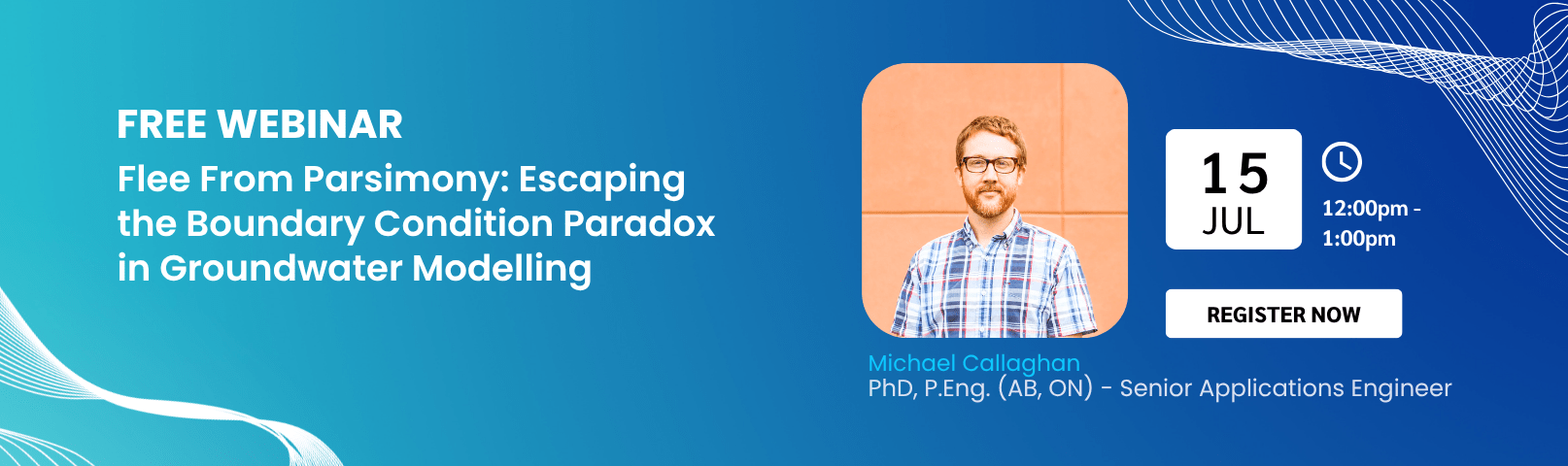
Webinar: Flee From Parsimony: Escaping the Boundary Condition Paradox in Groundwater Modelling

Join us for our upcoming webinar, Flee From Parsimony: Escaping the Boundary Condition Paradox in Groundwater Modelling, and explore how integrated hydrologic modelling approaches can address the growing complexity of groundwater management challenges.

Image description
Image description

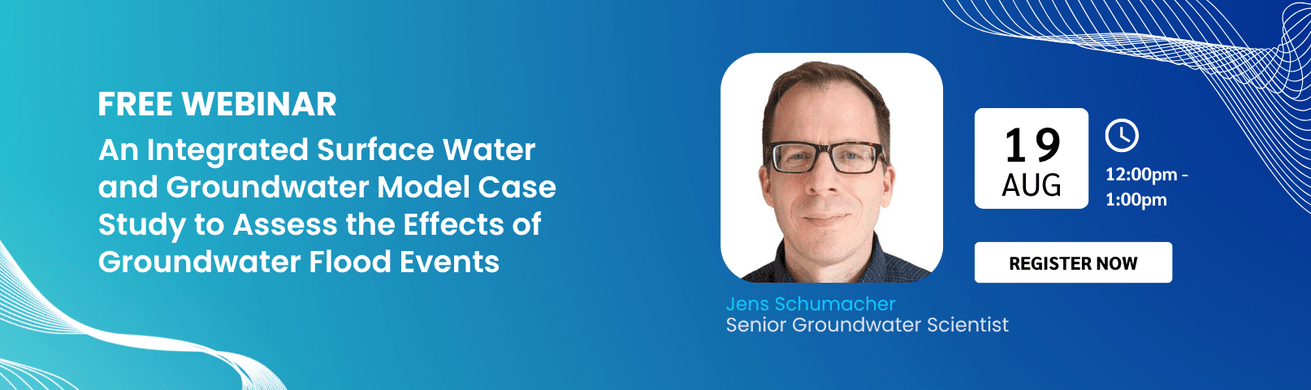
Webinar: An Integrated Surface Water and Groundwater Model Case Study to Assess the Effects of Groundwater Flood Events

Join us for an insightful presentation examining how integrated hydrologic modelling can improve our understanding of groundwater flooding and support more effective flood risk management in urban environments.

Image description
Image description

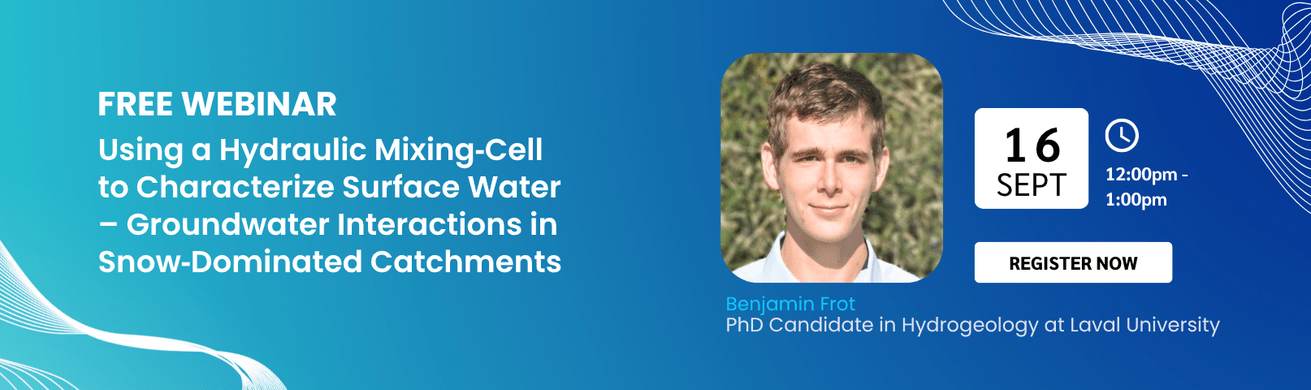
Webinar: Using a Hydraulic Mixing‑Cell to Characterize Surface Water – Groundwater Interactions in Snow‑Dominated Catchments

Join us for an engaging presentation which explores how integrated hydrologic modelling and the Hydraulic Mixing Cell technique in HydroGeoSphere can improve our understanding of groundwater contributions to streamflow, water age and climate change impacts in snow-dominated watersheds.

Image description
Image description

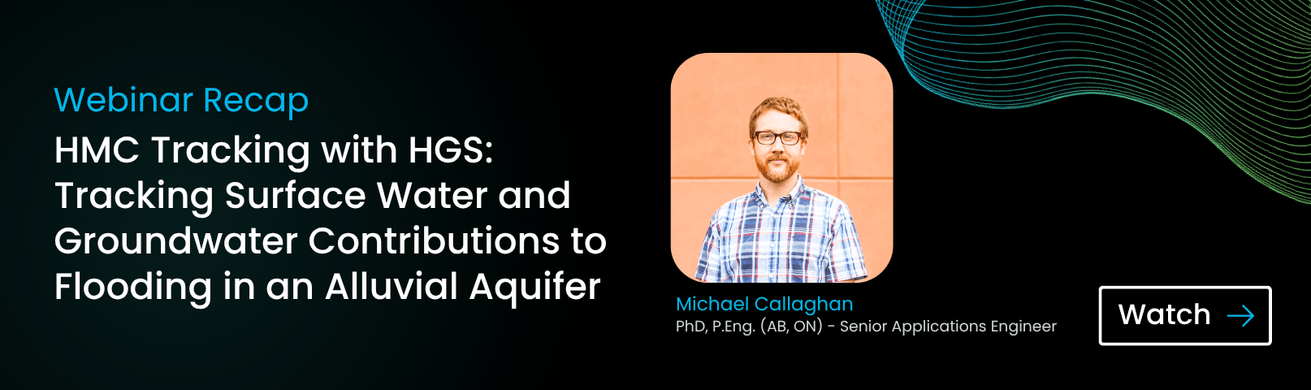
Webinar Recording: HMC Tracking with HGS: Tracking Surface Water and Groundwater Contributions to Flooding in an Alluvial Aquifer

Explore how integrated hydrologic modelling improves understanding of groundwater flooding risks in our most recent webinar with Dr. Michael Callaghan. Using HydroGeoSphere and the Hydraulic Mixing Cell (HMC) approach, this session examines the 2013 southern Alberta floods and tracks how surface water and groundwater contributed to flooding in an alluvial aquifer.

Image description
Image description
Image description

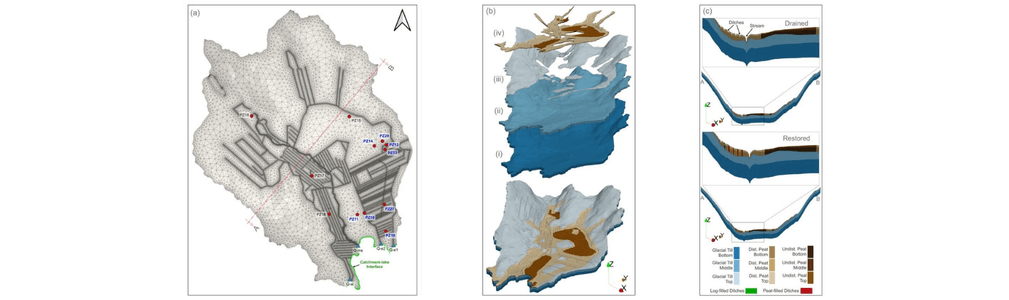
How Does Rewetting Propagate Through Restored Peatlands? An Integrated Surface–subsurface Modelling Analysis of Water–table Dynamics

This publication investigates how peatland restoration alters groundwater table dynamics across drained boreal peatlands using fully integrated hydrologic modelling. This study leverages HydroGeoSphere (HGS) to simulate coupled surface–subsurface flow processes and evaluate spatial patterns of groundwater response following ditch blocking and rewetting interventions, addressing long-standing challenges in predicting restoration outcomes across heterogeneous peatland landscapes.

Read More

Image description

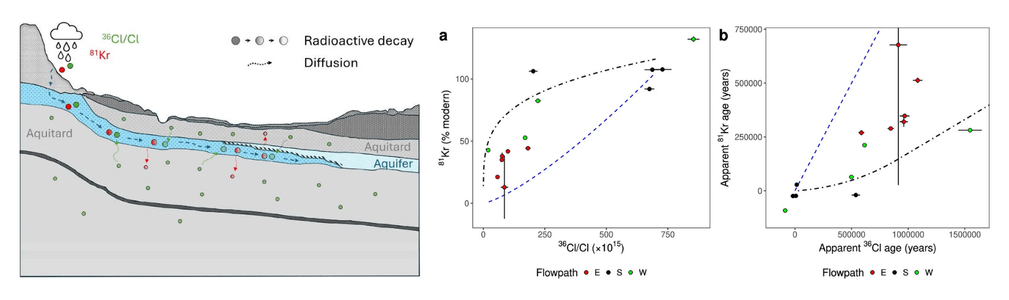
Diffusion-Controlled Solute and Isotope Transport in the Milk River Aquifer System, Alberta, Canada: Implications for Dating Old Groundwater
This research highlight investigates how diffusion-controlled solute transport influences groundwater age interpretations in the Milk River Aquifer (MRA), a transboundary aquifer system spanning southern Alberta and northern Montana. The study combines multiple environmental tracers, including krypton-81 (^81Kr), chlorine-36 (^36Cl), stable chlorine isotopes (^37Cl/^35Cl), and radiocarbon (^14C), with HydroGeoSphere (HGS) simulations to better understand groundwater residence times and the processes controlling tracer distributions in old groundwater systems.

Read More

Image description

Canada1Water Summer 2026 Newsletter Now Available

In this issue, the C1W team shares recent progress on model development, new data delivery initiatives, research publications, and practical applications of the Canada1Water framework across Canada and internationally.

Click below to read the full newsletter and stay up to date on the latest Canada1Water developments.

LEARN MORE
Image description

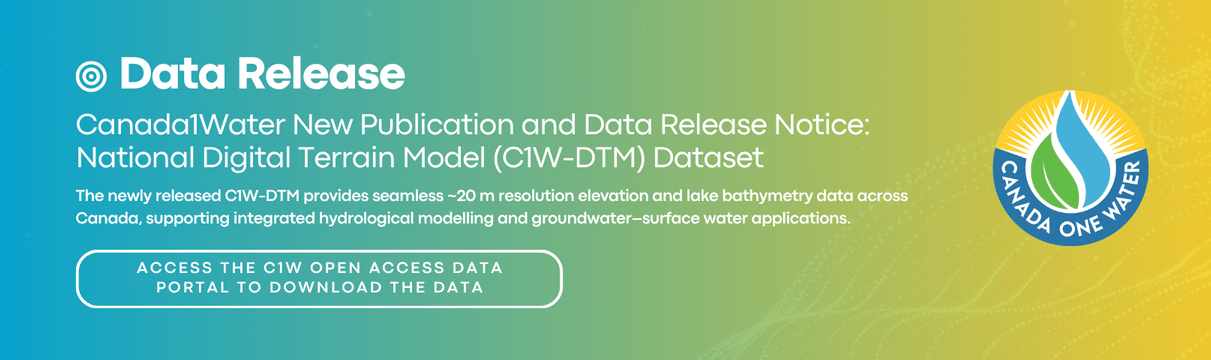
The Canada1Water Digital Terrain Model (C1W-DTM) dataset is now published in Data in Brief.

This peer-reviewed publication documents the development of a seamless 1-arc-second (~20 m) elevation and bathymetric framework designed to support integrated hydrological modelling across Canada and transboundary watersheds. The dataset combines multiple national and international elevation products with lake bathymetry to create a harmonized terrain framework for groundwater–surface water modelling, climate impact assessments, and water resource management.

Learn more about the publication and access the dataset through the Canada1Water Data Portal below.

LEARN MORE

New Publication - Application of machine learning to improve reanalysis soil temperatures over the extratropical northern hemisphere

We’re pleased to share a recent publication by C1W collaborators recently published in the Journal of Theoretical and Applied Climatology.

Using machine learning techniques and observations from more than 2,600 monitoring stations, the study developed a bias-corrected soil temperature dataset that significantly improves estimates from widely used land-surface products. The resulting dataset provides a valuable resource for hydrological modelling, climate research and environmental monitoring.

This work supports the broader goals of Canada1Water, helping improve the environmental datasets used to better understand groundwater–surface water interactions and climate change impacts across Canada and the Northern Hemisphere.

LEARN MORE
Image description

IMWA 2026 Conference

July 5th - 10th, 2026

Location: Jeongseon, Gangwon Province, South Korea
We’re excited to share that Dr. Hyoun-Tae Hwang will be attending the International Mine Water Association Congress (IMWA Congress), one of the world's leading events dedicated to mine water research, management and innovation.

LEARN MORE
Image description

Intro to HydroGeoSphere

Next session: July 8, 2026
Every month Aquanty's technical sales lead Brayden McNeill delivers a FREE 3-hour HGS crash course. This quick session will introduce topics such as the basic HGS workflow, the essential components of a *.grok file and visualizing model results.

REGISTER FOR TRAINING SESSION

HGS Software Release

Find our monthly HGS software update on our HGS Downloads page. A quick reminder that if you are updating to the Jan/Feb/Mar 2026 release there are some important installations steps to follow (one time only), find the details in the Release Notes.

The June 2026 software update is now available. This release improves parallel performance, reduces memory usage, enhances error checking, and expands visualization and output options to help streamline model development and post-processing workflows.

Key updates include:

• New csv output command for exporting nodal flux data as CSV files that can be easily visualized in tools like ParaView

• New chosen faces to tecplot command for simpler visualization and debugging of selected face sets

• Improved error and bounds checking for unsaturated tables across porous medium, dual continuum, and discrete fracture domains

• Performance and memory optimizations for grok, HGS parallelization, hgs2vtu, and preconditioner construction

• Fix for diagnostic output formatting related to bound time-file table boundary conditions

• Fix for interpolated observation points to ensure values are calculated at the correct z-coordinate


As always, we are committed to the continued improvement to the user experience. Do you have suggestions for new commands or improvements to the user experience? Send your ideas to [email protected]!

Read the release notes to see recent improvements to HydroGeoSphere.
Copyright © 2025 Aquanty Inc., All rights reserved.
Aquanty Inc., 600 Weber St.N., Unit B, Waterloo, ON N2V1K4, Canada, (519)-279-1080 [email protected]

Want to change how you receive these emails?
You can update your preferences or unsubscribe from this list.

If you would like to unsubscribe, please click here.